
Blog
Commercial lighting – the cheapest and most effective design tool you have
Subscribe
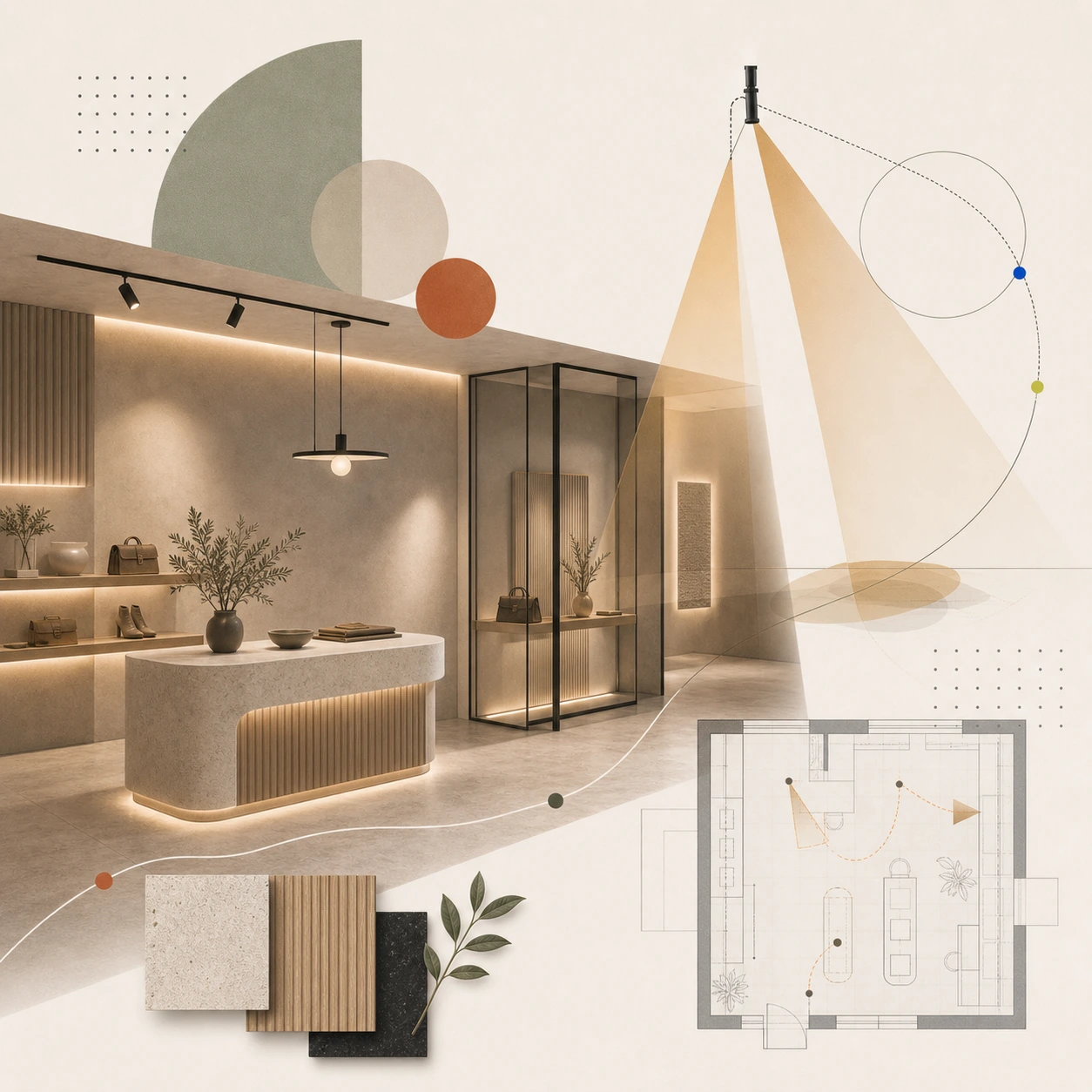
Lighting is the design element that has the most impact and costs the least to get right.
It's true in a restaurant, an office, a store, a hotel room, and a clinic. It's true for venues with high ambitions and for venues with limited budgets. And it's the area that's consistently underestimated and under-prioritized.
What light does to a person
Light affects us physiologically and psychologically. The intensity of light affects alertness and energy levels. Bright, cold light keeps us alert. Soft, warm lighting calms and relaxes. It’s a relevant design decision in any environment: do you want people to be alert and focused, or do you want them to relax and stay for a long time?
The color temperature of light, measured in Kelvin, is a technical parameter with great practical effect. Warm light, 2700 to 3000 Kelvin, is experienced as cozy and relaxing. Neutral light, 3500 to 4000 Kelvin, is standard in office environments. Cool light, 5000 Kelvin and above, is stimulating but can be experienced as harsh in longer exposures.
Lighting layers – why one light source is never enough
The most common mistake in commercial lighting is to rely on a single layer: overhead lighting that shines generally. It provides an even but flat light without depth, contrast or mood.
Professional lighting works in layers. General lighting is the general light that allows you to orient yourself and function in the room. Accent and spot lighting are directed at specific elements: a product, a piece of art, a table segment in a restaurant. Mood lighting works with dimmers and indirect light sources to create a feeling rather than a function. Natural light is the strongest but the most difficult to control.
Restaurants and dining experience
In a restaurant, lighting directly affects how food looks. The color temperature of the lighting above the table determines whether the red color of meat looks appetizing or gray, whether vegetables look vibrant or dull.
Warm lighting in the restaurant segment is no accident. It is an active choice that enhances the dining experience and creates the more intimate atmosphere that makes guests stay longer. A restaurant with a fixed lighting system that cannot be adjusted relies on a compromise that is never optimal.
Office and productivity lighting
In an office, the task of lighting is to support focus during long work shifts without causing fatigue. Glare is the enemy. It occurs when light sources are placed in the field of vision, when screens reflect window light, or when ceiling and wall surfaces are too glossy and reflective.
Dimmable office lighting allows employees to adapt their lighting environment to the task at hand. It's a small investment with a big impact on well-being and productivity.
Store and product lighting
In a store, the primary function of light is to highlight the product. Spot lighting on the products, with the right color temperature for the product's material, makes a dramatic difference in how the product is perceived by a customer. It's the difference between a product that lights up off the shelf and one that disappears.
Energy efficiency and LED
All commercial lighting should be LED today. This is not a sustainability claim, it is an economic fact. LED lighting consumes 70 to 80 percent less energy than traditional incandescent bulbs and lasts significantly longer. In a commercial space with lighting on for large parts of the day, the cost savings are significant.
Would you like to understand how lighting can improve your space? Fill out the form below. We'll get back to you.