Blog
Salon interior design for hairdressers and beauty salons – design that builds customer loyalty
Subscribe
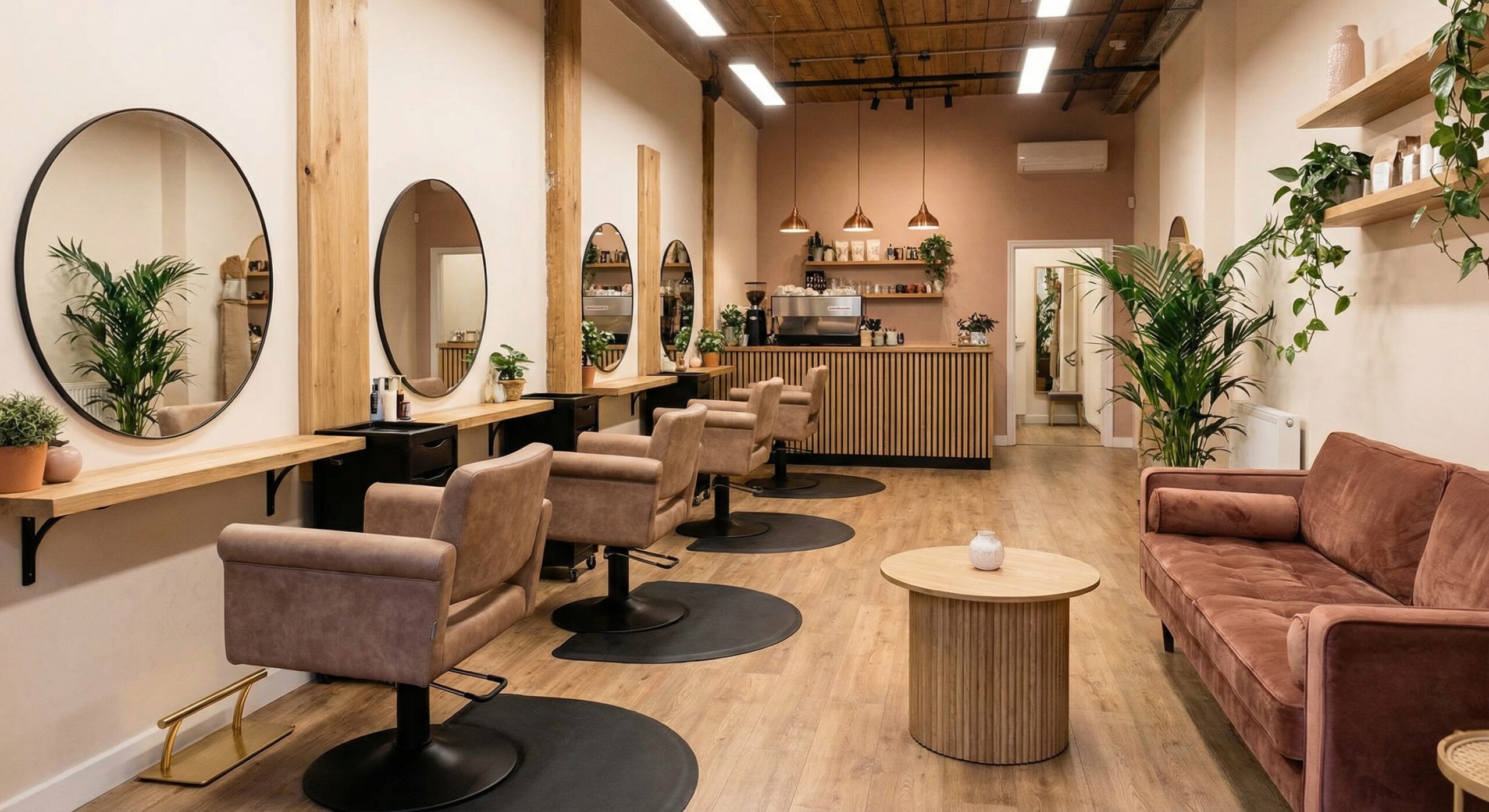
A customer who visits your salon isn't just buying a haircut or a treatment. They're buying the experience of being in your salon, from the moment they step in to the moment they leave.
It's the experience that determines whether they return. And it's the design that creates the experience.
A well-designed salon communicates competence and care before you say a word to the customer. It justifies the price you charge. And it creates the kind of loyalty that is hard to build with marketing but easy to build with the right environment.
What the customer experiences from the first second
The first impression of a salon is made at the entrance. It is the moment when the customer decides if they have made the right choice.
An entrance with a clear aesthetic, good lighting and a feeling that everything is well thought out signals professionalism. It confirms that they have made the right choice.
An entrance with an old rug, a plastic bowl of candy, and fluorescent lighting shining harshly on the shiny surfaces of the mirrors communicates the opposite. Not necessarily that the quality is low, but that the details are not prioritized. And most customers conclude that if you don't care about the details of what you see, you might not care about the details of what you do either.
It's not fair. But it's human.
The location and function of the speculum
Mirrors are the work surface in a hair and beauty salon. They need to be positioned correctly for the work to work, but they are also one of the strongest design elements in the space.
The placement of the mirror determines how the light falls on the client and the work surface. Incorrect placement creates shadows that make the work more difficult and give the client a misleading impression of the result.
The size of the mirrors affects the feel of the space. Large mirrors open up a room and create a more generous impression of the space. It is a well-known design tool in salons with limited square footage.
The mirror frame and how it fits together with the work surface, storage solutions and lighting around the mirror is one of the strongest aesthetic expressions in the salon. It is worth investing in it.
Lighting for the work actually being done
Lighting in a hair salon is one of the most technical lighting problems in commercial interior design.
The customer should see the result correctly, in a light that matches how they look in real life. This requires that the lighting at the mirror is neutral in color temperature and evenly distributed, without shadows that distort the experience.
The therapist or hairdresser needs a work light that allows precision. This requires good lighting of the surface being worked on, without dazzling either the client or the worker.
These are two separate requirements that are sometimes difficult to solve with one system. It requires planning and often separate lighting for task lights and mirror lights.
Waiting area and reception – the forgotten opportunity
The waiting zone is the zone where the customer is without being taken care of. It is a moment that either strengthens or erodes the experience.
A waiting area with comfortable seating, well-placed newspapers or other entertainment, good lighting and a visual expression that matches the rest of the salon communicates that the customer is welcome and taken care of, even while they wait.
A waiting area with hard chairs along the wall and a table with a half-read newspaper communicates that you didn't think about it. It's a low investment with a clear effect on the customer experience.
Color, material and salon DNA
A hairdressing or beauty salon needs a clear aesthetic expression. It doesn't have to be extravagant, but it needs to be consistent and well thought out.
The color palette on the walls, the material choices on the floors and furniture, the lighting philosophy and any decorative elements should all communicate the same thing: what this salon is and for whom.
A salon that caters to a younger, trend-conscious clientele communicates differently than one that caters to a more traditional clientele. This should be reflected in the design. And it should match how you market yourself externally. Inconsistency between marketing and location is one of the most common problems we see in this industry.
Storage and operating logic
A salon has high storage requirements: products, tools, towels, chemicals. If storage is not well thought out from the start, it disrupts the flow and makes the environment visually cluttered.
Hidden storage under the counters, well-planned shelving systems, and a clear system for which products are visible and which are hidden are design decisions that affect how clean and professional the salon looks in operation.
It's one thing to design the salon for the day of the shoot. It's another thing to design it for what it looks like on a busy Tuesday afternoon.
How we work with salon furnishings
We start with your market position and your customer group. Then we design an environment that communicates who you are and works in real-world operations.
Are you planning to open, renovate or reposition your salon?
Fill out the form below with your name, email address, and a message about what you're working on. We'll get back to you.