
Blog
Spa and wellness interior design – how design creates the experience guests pay for
Subscribe
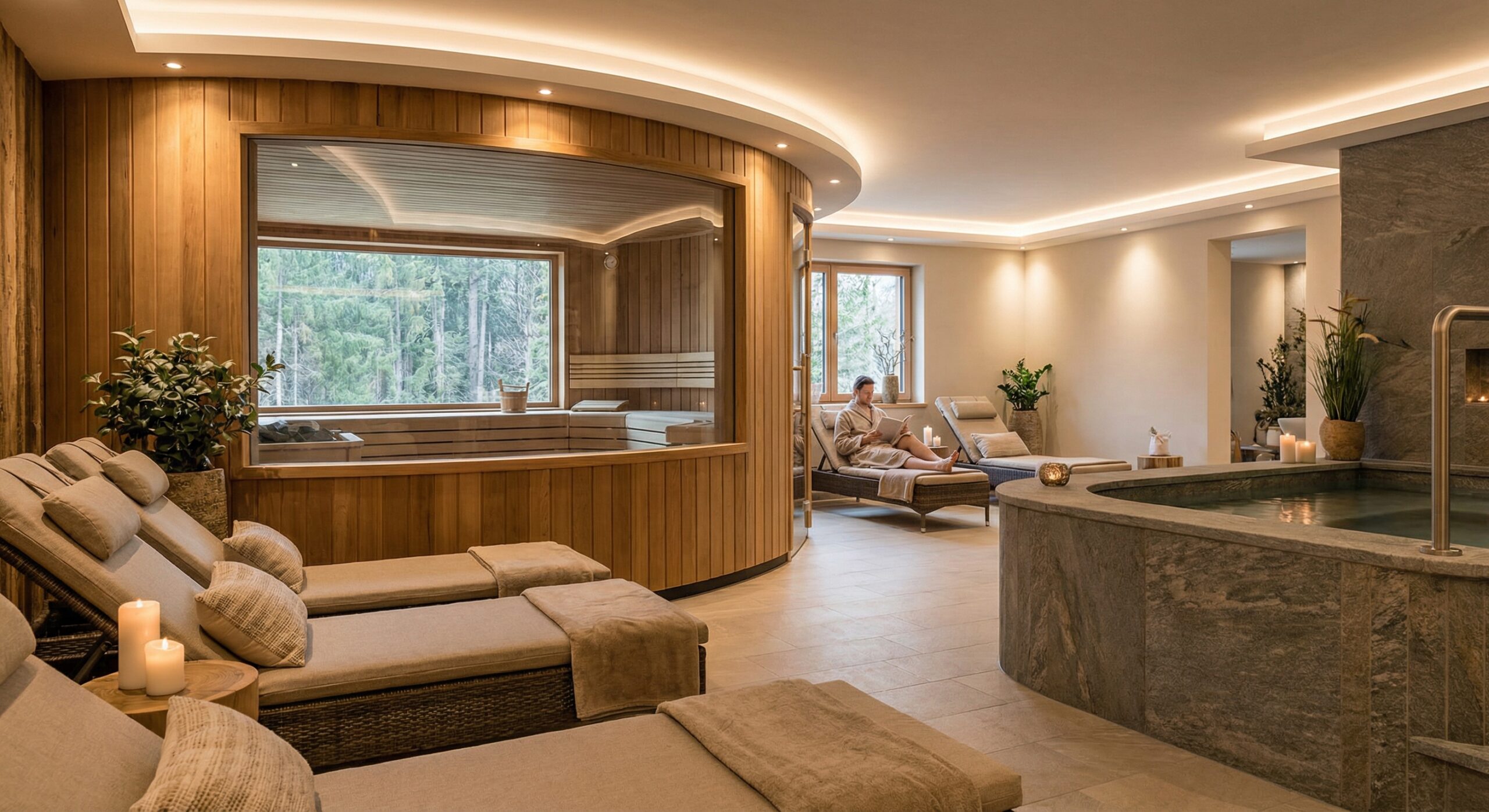
A spa treatment lasts one hour. The experience of being at a spa begins when the guest steps through the door and ends when they leave.
It is the total experience the guest pays for, not the 60 minutes on the treatment table.
It's a simple fact with great consequences for how a spa should be designed. Every part of the space, from the reception to the changing room, from the waiting area to the hallways, is part of the product. If any of them is lacking, it affects the whole, no matter how good the treatments are.
What a spa guest is really looking for
A guest who books a spa visit is not primarily looking for a treatment. They are looking for a break. A break from what they left outside. An environment that actively supports relaxation.
It is a psychological state, and it is the job of design to enable it.
This means that spa design requires a completely different perspective than, for example, office or restaurant design. Tempo, sound, lighting and material selection should all pull in the same direction: downshifting.
Hard, reflective surfaces, strong colors, high contrast, and sharp shapes counteract that feeling. Softer materials, muted acoustics, indirect and warm lighting, natural elements, and thoughtful fragrance support it.
Entrance and reception – the transition from the outside
The entrance to a spa is one of the most important design challenges in the entire project.
The guest often comes from a stressful everyday life. The entrance is the transition zone, the place where they physically and psychologically leave what they came from. The design should facilitate that transition.
This means a clear but calm welcome environment. No high counters that create a sense of a reception as a barrier. No bright lighting that continues the pace of the city. No loud music that competes with what the guest is trying to leave.
Materials such as wood-clad walls, natural stone or soft-textured carpet, lighting that is stepped down compared to the outside, and a sound and scent impression that is clearly different from the street. These are the elements that signal: you are in the right place now.
The treatment room – function and feel in balance
The treatment room is the room the guest spends the most time in and the room that leaves the strongest memory.
It imposes technical requirements: proper ventilation, the right temperature, accessible storage solutions for the therapist, and hygiene requirements that are non-negotiable. But it also imposes design requirements that are more difficult to specify but equally important.
The ceiling is what a lying guest looks at throughout the treatment. It's a design perspective that surprises most people, but it's crucial. What meets the eye? A regular acoustic panel with fluorescent lights, or a ceiling with warm lighting and a material that conveys care?
Sound is another dimension. Sound leaks in from other treatment rooms, from corridors, from technical equipment. In a spa, it is a fundamental quality issue. Acoustic insulation and careful placement of technical installation are not luxuries, they are requirements.
Changing rooms and transition zones
The locker room is the room most spa owners put the least design energy into. It's also the room guests talk about the most when things are bad.
Cold floors, cramped benches, overhead lighting, and cabinets that don't close properly. It's a combination that ruins the feeling faster than almost anything else.
A good changing room is generous in feel, not necessarily in size. Heated floors, soft lighting, sufficient storage solutions and a choice of materials that withstand moisture and daily traffic. It's an investment that pays off in the guest experience.
Pool and aquatic environments
If the facility includes a pool, jacuzzi, steam room or sauna, this is where the design requirements become most technically and aesthetically crucial.
Water features enhance everything: the lighting, the proportions, the texture of the materials. A well-designed pool facility can command premium prices and create the kind of experience guests share with their networks.
It requires working with specialized knowledge of moisture management, material resistance and ventilation requirements. It also requires an aesthetic vision that holds up in a wet and warm climate. Not all materials and not all shapes work in those conditions.
Scent, sound and atmosphere – the dimensions that remain
Most spa guests don't remember exactly what materials were used on the wall. But they remember the feeling. And the feeling is often in the sensory dimensions that are difficult to photograph.
Scent is one of the strongest memory anchors we have. A well-thought-out and consistent scent profile, not perfumed air but a subtle, specific scent that is linked to the place, creates an association that is activated every time the guest encounters that scent again.
Music and sound are equally important. Level, genre and how the sound is distributed in the venue should be well thought out. It's not background filling, it's a design parameter.
How we work with spa design
We have experience in wellness environments and understand the balance between technical requirements and experiential goals. We always start with what you want the guest to feel and work backwards to every design decision.
Are you planning a new spa, a renovation or an upgrade of your wellness facility?
Fill out the form below with your name, email address, and a message about your project. We'll get back to you.