
Blog
Warehouse hotels and mini hotels – how design maximizes revenue per square meter
Subscribe
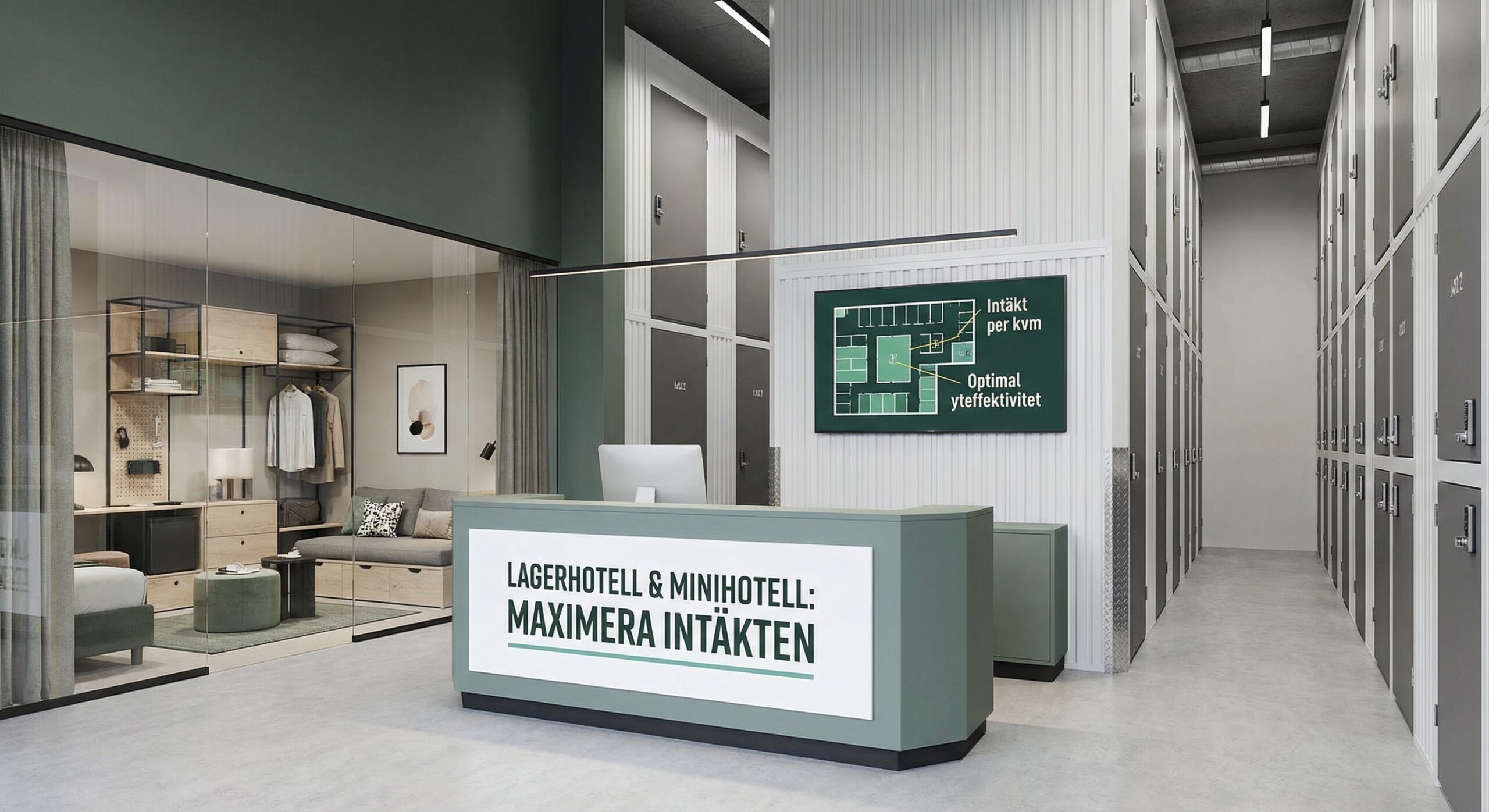
Compact hotel formats, warehouse hotels, mini hotels and capsule hotels, are a segment that has grown in Sweden in recent years. It is a format that challenges traditional hotel economics: fewer square meters per guest, more guests per square meter, and a price that should be lower for the guest but provide more revenue per area for the owner.
That equation demands that the design do an exceptional job. There is no room for wasted square footage. And there is also no room for a poor guest experience – the segment compact hotels are targeting has clear options and provides clear reviews.
Designing for compactness without feeling cramped
The primary design problem in a mini-hotel or warehouse hotel is to create a room that feels functional and acceptable to be in, despite its very small size. This requires that every design decision be motivated by function. Unnecessary elements take up space that the venue cannot afford to sacrifice.
Built-in storage under the bed and in the walls. Foldable or multifunctional furniture. Lighting that is placed to open up the room rather than compress it. Mirror surfaces strategically placed to give a feeling of more volume. These are design techniques used in small condominium design but which in the mini-hotel segment are business-critical, not just convenient.
Common areas as compensation for private areas
In compact hotel formats, the small room is compensated by well-designed common areas. A generous and well-designed lobby, a good breakfast room, a social area with good wifi and comfortable seating, a well-maintained changing room with shower and sauna if possible. These are the areas that motivate the guest to choose a compact room at a lower price.
If the common areas are bad, the small room takes all the blame for a negative review. We always design mini-hotel projects with the common areas as a priority as the private ones.
Technical infrastructure in compact rooms
In a small room, technical infrastructure is a design issue as much as a technical one. Power outlets and USB charging need to be in the right places, by the bed and by the work surface, without cables and cords taking up visible space. Wifi needs to be strong in every room – it’s a basic requirement in the segment that chooses compact hotels, professional travelers and digital nomads. Ventilation needs to be quiet and efficient.
Acoustic insulation in a compact format
Compact hotels often have more rooms per square meter, which means more accommodations in close proximity to each other. This places high demands on acoustic insulation. Guests who can hear their neighbors well are guests who write about it in their reviews. Acoustic insulation in walls, floors and ceilings is a non-negotiable requirement in that format.
Photography and digital presentation
Compact rooms are difficult to photograph. That's a fact. And bad photographs of a small room give an even worse impression. A well-designed mini-hotel studio is best photographed with a wide-angle lens, the right lighting and a styling that brings out the maximum potential. This requires that the room is actually well thought out and that there are elements worth photographing. A monochrome, drab but correct little box never photographs well.
Are you planning a warehouse hotel, mini hotel or other compact accommodation project?
Fill out the form below with your name, email address, and a message about your project. We'll get back to you.