
Blog
Gym interior and training facilities – design that motivates and sells membership
Subscribe
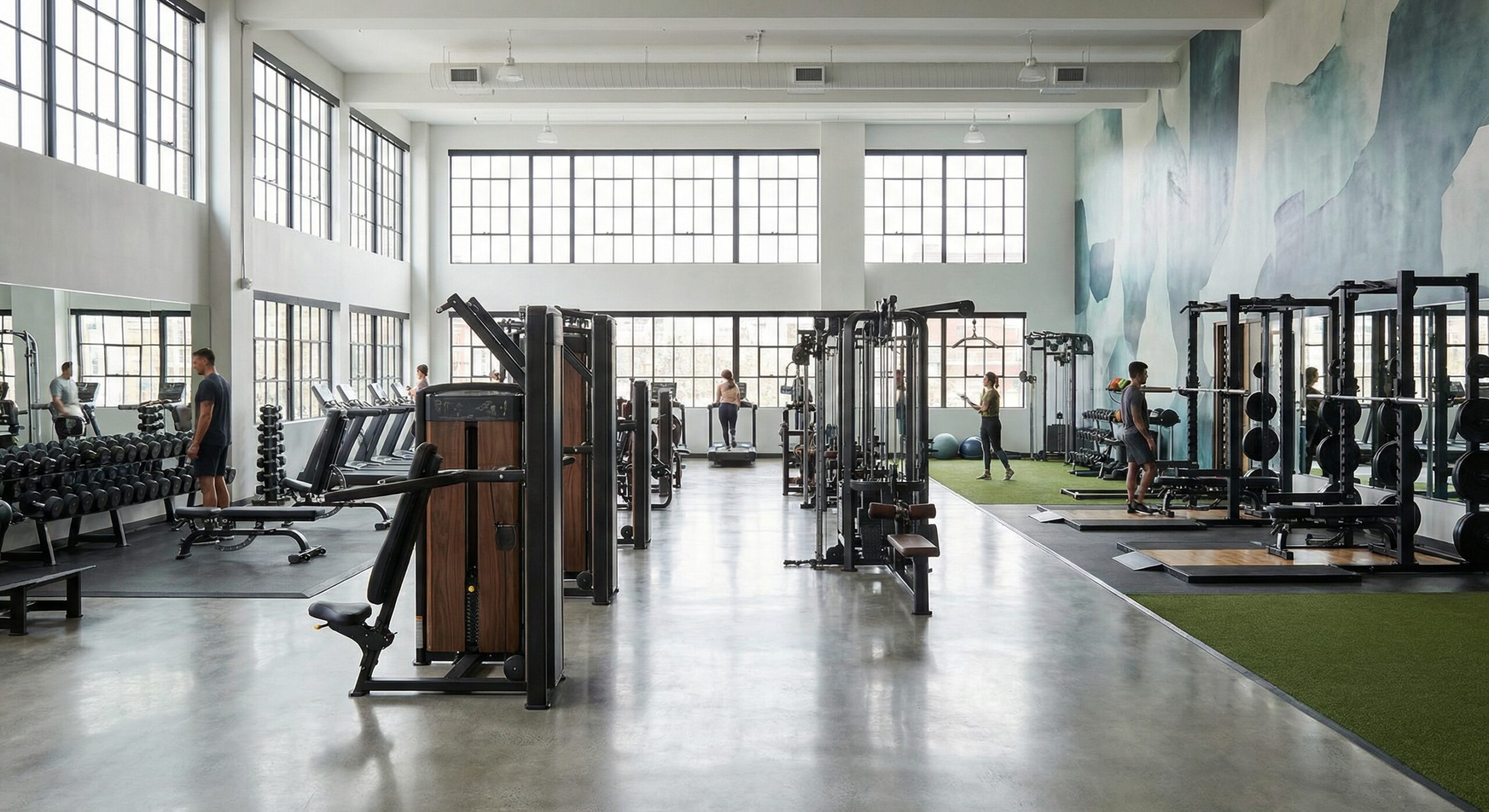
High schools compete on more fronts than most people realize: price, schedule, coaches, equipment, and location. But one of the strongest differentiators, and one of the most underutilized, is environment.
A fitness facility that is well-designed, cohesive, and communicates a clear brand sells more memberships and retains its members longer.
Why design influences exercise behavior
There is a well-documented connection between environment and motivation. A well-designed training environment makes people train harder and longer. It's about lighting, how the proportions of the room affect freedom of movement and the feeling of energy, the distribution of music in the room, how mirrors are placed and what signaling effect they give.
It's also about identity. A person who chooses a premium gym wants to feel that the environment reflects the investment they are making. If the environment doesn't match the price, a cognitive dissonance is created that makes them actively look for an alternative.
Entrance and reception – the brand starts outside
The entrance area of a gym is more important than most trainers and gym owners realize. It's the place where a potential new member makes their first impression. It's the place where an existing member begins their workout, every time.
Signage, lighting, choice of materials in the reception area and what is visible towards the training areas at the entrance communicate before a single rope is lifted.
Zoning of the training area
Most gyms have multiple training zones with different characteristics: free weights, machines, cardio, functional training, group training rooms. Each of them has specific design requirements.
The free weights zone requires robust flooring that absorbs shock, mirrors in the right location and height, and an aesthetic that communicates strength and intensity. The cardio zone requires good lighting, access to screens, and a flow that allows for efficient use of the equipment. The group training room requires an acoustic solution, flexible flooring, and adjustable lighting.
What all zones have in common is that they need to be aesthetically cohesive. It's not a neutral technical issue, it's a branding issue.
Locker room – what determines the return
The locker room is the room gym members spend the most time in, in addition to the training area, and it is the room that leaves the strongest impression on the experience of the gym.
Moisture management, ventilation and hygienic material selection are basic technical requirements. But design plays an equally important role. A changing room that is well-lit, well-ventilated and with an aesthetic expression that matches the rest of the facility elevates the entire experience.
Premium gym versus low-cost competition
The market for gyms in Sweden is divided. Low-cost chains compete on price and availability. Premium gyms compete on experience, service and environment.
If you're running or planning a premium gym, design is one of the most critical investments you'll make. It justifies the price difference. It gives existing members a reason to stay. And it gives potential members a reason to choose you over the chain around the corner.
Photography and digital marketing
A well-designed gym is a photogenic gym. Instagram, website and Google My Business images are often the first thing a potential new member sees. A facility that is well-designed and well-photographed competes better for that exposure than one that has better technical equipment but communicates less well in images.
Are you planning to open, renovate or reposition your fitness facility? Fill out the form below. We'll get back to you.