
Blog
Kitchen design for restaurants – how to design a professional kitchen surface that works in operation
Subscribe
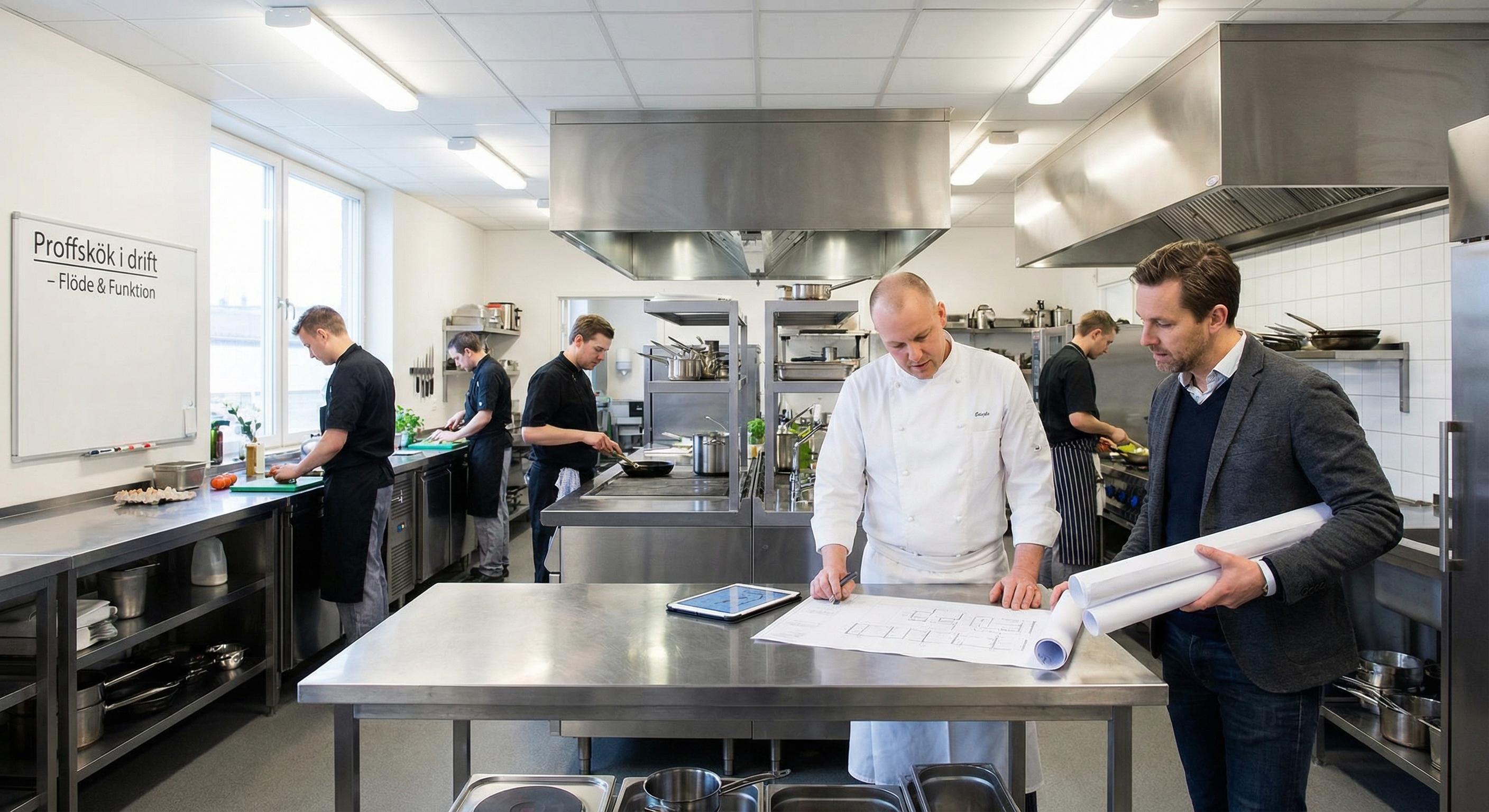
The restaurant kitchen is rarely seen by guests. It is always noticeable.
How quickly the food comes out, how consistent the quality is during a fully booked evening, whether there is capacity to handle an extra order at closing time – all of that is determined by how the kitchen is designed.
It is a technical project with great strategic impact. And it is a project that is more often done wrong than right, because too little time is spent on planning and too much on budget.
The kitchen as a production system
It helps to think of a restaurant kitchen as a production system, not as a room with equipment.
A well-designed production system minimizes the distance traveled for each step in the cooking flow. This means that raw materials, preparation surfaces, cooking equipment and serving are placed in a logical sequence that matches how the food is actually made.
If the chef has to walk five meters to retrieve a utensil, doing it twenty times a night, that's time and energy that could have been spent on food. Multiply by the entire kitchen staff and all the nights, it's a significant productivity loss that is directly linked to the kitchen layout.
The cooking triangle and how it works in commercial kitchens
In the home kitchen, we talk about the work triangle: stove, sink, and refrigerator in a triangular flow. In a professional restaurant kitchen, the logic is similar but more complex.
There is typically a preparation segment, a cooking segment and a serving segment. These three should be connected in a flow that is as short as possible, without personnel crossing and without hot and cold food being handled in close proximity to each other in a way that creates food safety risks.
In a linear kitchen, the segments run in a row. In a U-shaped kitchen, they are arranged around a central walkway. Which layout works best depends on the size of the kitchen, the number of staff and the complexity of the menu.
Ventilation – what determines whether the kitchen is safe to work in
Ventilation is the most technically complex and costly to fix afterwards of all kitchen design elements.
Professional kitchens produce enormous amounts of steam, grease, smoke and heat. Without adequate ventilation, it is not possible to work in the kitchen during peak hours. It is also a fire safety requirement and a hygiene requirement.
The ventilation system – fans, ducts and cooker hoods above cooking equipment – should be sized for the actual production flow in the kitchen. This requires knowing what the maximum capacity of the kitchen is and designing for that, not for an average scenario. We always work with ventilation consultants on restaurant kitchen projects. It is not an area where you take chances.
Flooring materials and hygiene zones
The floor in a professional kitchen is exposed to heavy wear, moisture, grease and chemical cleaning. It is one of the material choices that requires the greatest uncompromising performance.
Tiles with deep joints collect grease and are difficult to clean properly. Epoxy floors are easy to maintain but wear out from heavy traffic. Stainless steel floors are hygienic but expensive and can be slippery.
The most common and often best choice is tiles with epoxy-filled joints, which provide a tight, cleanable floor without the hygiene shortcomings of traditional tile joints. Floor slope towards floor drains is a non-negotiable requirement. Water and grease that remain standing create risks and problems.
Storage and mise en place
Storage in a professional kitchen is not an aesthetic decision. It's an efficiency decision.
Every ingredient, utensil and container should have a place. And the place should be logical in relation to the step in the cooking process where it is used.
Wall-mounted stainless steel shelving systems, under-counter storage and clear organization of the cold and freezer storage are basic requirements. Refrigerators and freezers should be placed close to the stations where they are used, not along a wall because they fit there.
The boundary between kitchen and dining room
For restaurants with open kitchens, or semi-open kitchens with visibility from the dining room, the border zone is a design challenge with great potential reward.
A well-designed open kitchen is a marketing tool. It shows guests the production of their food, it creates transparency, and it can build trust and fascination.
This places demands on the kitchen as a design: it needs to look professional even during full operation, the ventilation must work without odors spreading into the dining room, and the lighting and material choices must work aesthetically in relation to the dining room design.
Are you planning to build, renovate or redesign your restaurant kitchen?
Please fill out the form below with your name, email address, and a message about your situation. We'll get back to you.