
Blog
Office renovation without closing the business – how to plan a renovation while it’s in operation
Subscribe
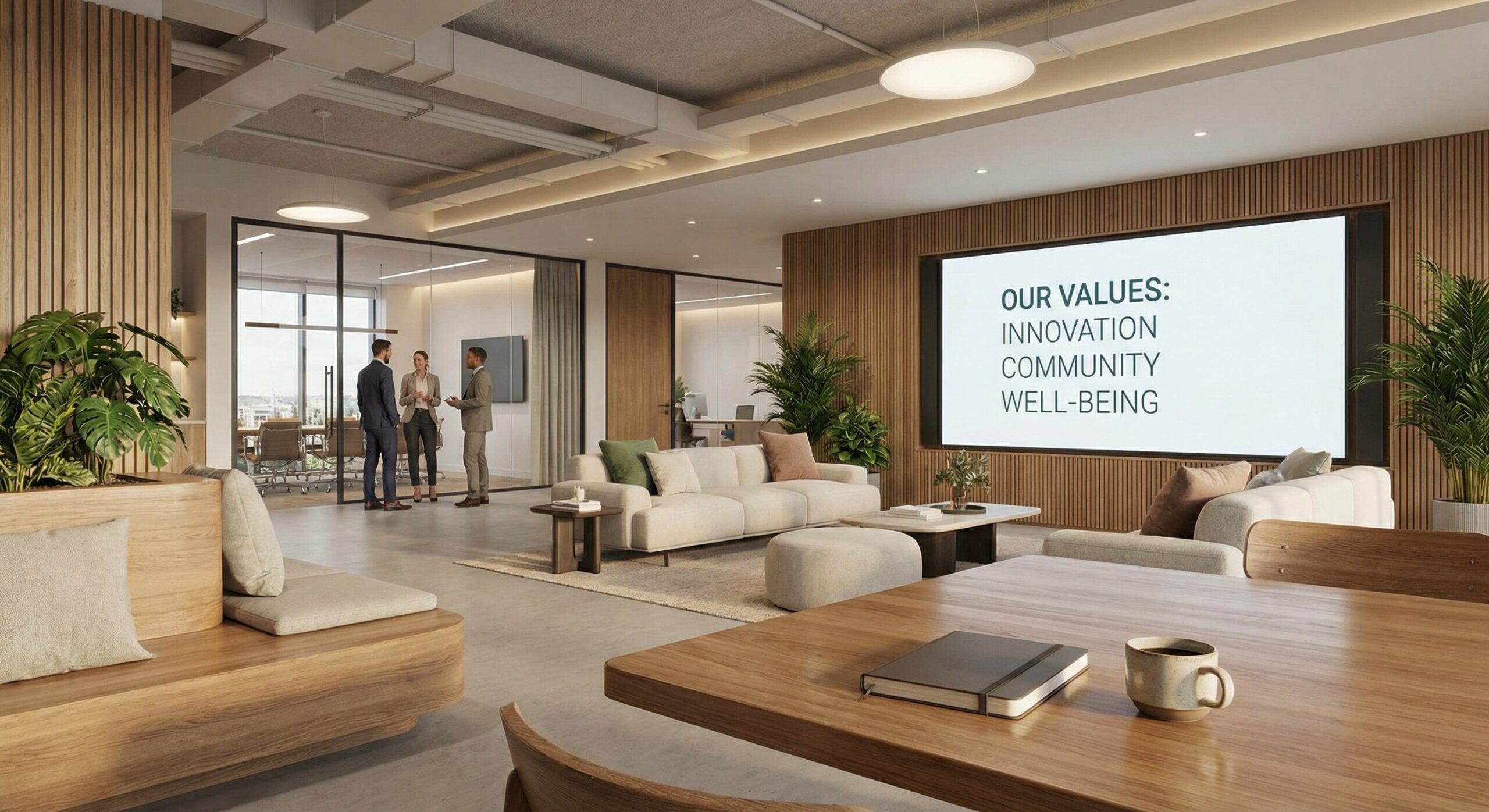
There's a catch 22 in office renovations for growing companies: you need to renovate to keep your space functioning, but you can't afford to close the business for six months while it happens.
It's a common situation. And it's manageable, but it requires planning that starts long before construction begins.
Why staging is everything
A renovation during operation is fundamentally a phasing problem. You can't renovate everything at once if the staff will still be working in the premises. The solution is to divide the premises into stages and renovate one part at a time.
This requires you to design for the phasing in advance. Which parts of the office are least business-critical and can be renovated first? Where can temporary workspaces be created while a zone is renovated? How will ventilation, electricity and network access be handled during construction? These are questions that should be answered in the design phase, not during construction.
Temporary solutions that actually work
One of the most important design issues in an in-service renovation is how to create temporary workspaces that work well enough to not reduce productivity during the construction period. This often involves reconfiguring parts of the space that are not being renovated: creating a temporary gathering area, moving furniture, ensuring network and power access. Sometimes it means temporarily renting external office space.
It is a cost, but it should be weighed against the alternative: a renovation that drags on because the stages were not planned, or a space that never reaches the right design result because the budget was blown.
Noise and disturbance during construction phase
Construction work is disruptive. It is inevitable, but it can be minimized with planning. The most disruptive activities, drilling, hammering and welding, should be scheduled for times of lowest activity: early mornings, lunches and evenings. This requires the construction contractor to have a clear agreement on working hours.
Dust and dust dispersion are another nuisance. Temporary dust cloth walls that separate the construction zone from the work area are a standard requirement in renovations in operation. We communicate these requirements clearly in the procurement documents and ensure that the construction contractor understands that this is a project with active operations.
Communication with staff
An operational renovation requires thoughtful internal communication. Staff need to know what is happening, when it is happening and how it will affect them. Uncertainty creates stress. Clarity reduces it. A simple weekly update on renovation status is a minimum.
The ability to make changes in stages
A phased renovation also means that the design can be adjusted during the process. If the first stages show that a material choice is not working as intended, or that the flow needs to be adjusted, it can be handled in the next stage. This is an advantage over a total renovation where all decisions have to be made and locked in beforehand.
We see it as part of the process to have a closing meeting after each stage to evaluate and possibly adjust for the next one.
Timetable and realistic expectations
Renovations in operation take longer than renovations in an empty space. It’s inevitable. More considerations, more coordination needs, and more limited working hours result in a longer total project time. This should be factored into expectations from the start. Pushing through a renovation in operation in record time to save on rent on temporary space is a common trap that leads to poorer results and more disruption.
We are clear about realistic timetables and we do not propose phased plans that we do not believe will work.
Do you have an office that needs renovation but a business that cannot close down?
Fill out the form below with your name, email address, and a message about your situation and location. We'll get back to you.