
Blog
Clinic Design in Stockholm: How Interior Design Affects Patient Experience and Conversion
Subscribe
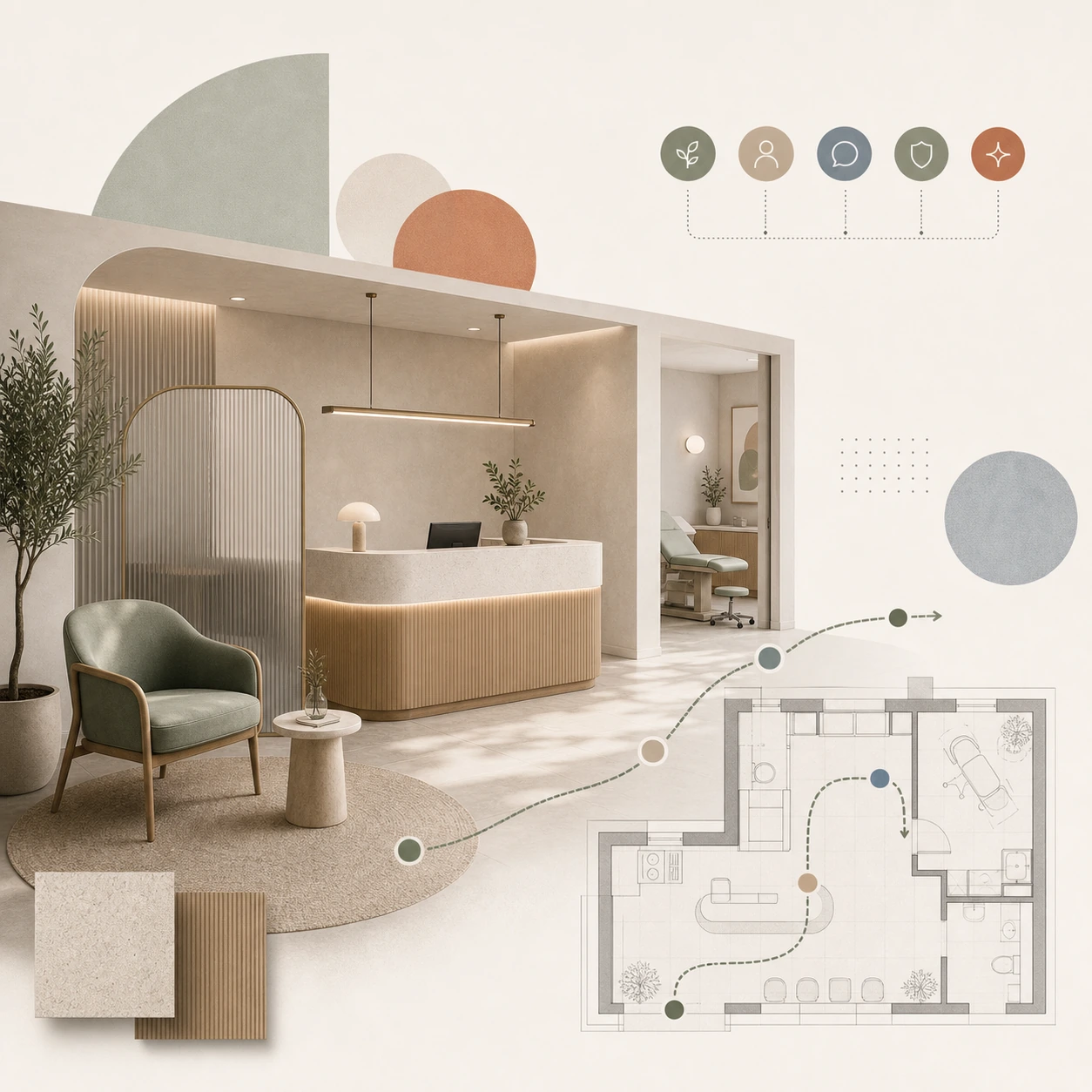
A clinic in Stockholm is not only competing with other healthcare providers. It competes with patient expectations of control, safety, time, privacy and quality.
This includes dental clinics, aesthetic clinics, dermatology clinics, specialist clinics, rehab clinics and private care settings. Patients often choose before treatment begins. They choose on the website, in the booking flow, in the entrance, at the reception and in the feeling of whether the room seems to take their concerns seriously.
Clinic design in Stockholm is therefore not decoration. It is an operational and commercial issue. The space should reduce friction, support the work of staff, meet technical requirements and make it easier for the patient to say yes to the next step.
Stockholm raises the bar on clinic experience
A clinic in Östermalm, Vasastan, Stureplan, Kungsholmen or in a growing node like Hagastaden is not judged in the same way as a generic clinic in an anonymous location. Patients compare it to other premium services in their lives: hotels, gyms, restaurants, beauty salons, specialist care and digital services that work without friction.
This does not mean that the clinic should feel like a hotel. It means that the quality of the environment must be linked to the price, positioning and care offered. A clinic that charges premium prices but greets the patient with cold light, poor acoustics, unclear reception and worn materials creates a gap. The patient feels it before they can articulate it.
In Stockholm, that gap is expensive. Rents are high, competition is intense and patients have many choices. Every square meter has to work for the business.
The reception is not a counter. It is the first piece of evidence.
Reception determines how quickly the patient understands where they are, what to do and whether the clinic is in control. It is a small zone with a big psychological impact.
A weak reception does three things wrong. It creates uncertainty on arrival. It exposes administration, cables, papers and internal mess. It forces staff to deal with questions that the room should have answered itself.
A strong front desk does the opposite. It gives the patient a clear first direction, protects privacy during calls and payment, makes check-in smooth, and communicates that the clinic has order even behind the scenes. It's about counter height, positioning, materials, lighting, signage, storage and what the patient sees while they wait.
In a clinic, order is not just aesthetics. It is trust.
The waiting room should reduce stress, not mark waiting
The waiting room is often the most underrated room in a clinic. It is also the room where the patient has time to feel. Anxiety, irritation, noise, waiting time and uncertainty are amplified when the environment is wrong.
The classic mistake is to think of the waiting room as a space for chairs. This often results in a row of seats along the walls, harsh lighting, poor acoustics and a sense of institutional waiting. It may be clean and functional. It's still not very good.
A better waiting room works on several levels at once: seating comfort, distance between patients, noise level, light, sight lines, materials, privacy and a clear flow to treatment rooms. It doesn't have to be big. It needs to be well thought out.
For dental, aesthetic and specialist care where anxiety or anticipation is high, this is particularly important. A calmer patient is easier to meet, easier to inform and often more likely to follow the treatment plan.
The treatment room must work for both patient and team
The treatment room is where clinic design becomes most concrete. It needs to support hygiene, workflow, equipment, lighting, storage, documentation and the patient experience all at the same time.
For staff, it's about ergonomics and efficiency. Where are the instruments? Where does the assistant move around? How close are laundry, storage, waste and documentation? How many steps are required to prepare the room between patients? Where do queues or unnecessary micro-breaks occur?
For the patient, it is about what the body perceives. The light on the ceiling. The sound of the corridor. Where the staff are standing. Whether the door feels exposed. What is visible when you lie back. Whether the room feels cold, stressful or controlled.
This is where many clinics lose their premium position. They invest in high-end equipment but place it in an environment that still feels generic. The equipment signals competence. The room must signal the same.
Light, acoustics and materials go beyond surfaces
Light is one of the most effective tools in clinic design. It should support staff precision, but it should also avoid making the whole environment harsher than necessary. Treatment light and room lighting are two different things. When they are mixed together, the room often becomes clinical in the wrong way.
Acoustics are equally important. A clinic where the patient hears calls from reception, sounds from treatment rooms or footsteps in the corridor feels less private. In healthcare environments, sound doesn't just affect comfort. It affects privacy and trust.
Material choices need to withstand cleaning, wear and tear and hygiene requirements without creating a cold environment. It's a balance. Too soft becomes impractical. Too hard becomes stressful. The right materials strategy makes the clinic feel warm without losing its professional precision.
We have written more about this in our guides on lighting in commercial premises and material choices in commercial interiors. In clinics, both issues become sharper as the space needs to be both commercially, hygienically and emotionally intelligent.
Conversion starts before the treatment plan
Conversion in a clinic is not just about ads, booking systems or sales calls. It starts when the patient assesses whether the clinic is worth trusting.
This is particularly the case in private clinics where the patient pays a larger share of the cost. If the environment feels well thought out, the perceived quality increases. If the flow feels smooth, resistance is reduced. If the treatment room feels safe, it is easier to take in information. If the reception feels professional, payment is less sensitive.
This does not mean that design replaces clinical competence. It means that design makes competence more visible and easier to accept. A good practitioner in a weak environment has to work harder to gain the same trust.
Stockholm technology: building permits, ventilation and operation
A clinic is not just an interior design issue. It is often a question of change of use, ventilation, accessibility, hygiene, fire protection and operation. A space that used to be an office, shop or salon may seem suitable, but that doesn't mean it technically supports a healthcare business without adjustments.
Ventilation, water, sewage, treatment rooms, staff areas, cleaning, waste, storage, WC and patient flow must be checked early. This is particularly important in Stockholm, where commercial locations are often expensive and where the wrong premises quickly tie up capital in rent, planning and delays.
The best clinic design therefore starts before you lock down the plan. It starts with the question of whether the premises can actually support the business. We've written more about that part in the article on building permits for commercial premises in Stockholm.
What a clinic project with Eolos means
Eolos works with clinics that need more than a pretty interior picture. We look at patient flow, staff flow, reception, treatment rooms, materials, light, acoustics, brand experience, technical feasibility and opening clarity as a coherent project.
For a private clinic in Stockholm, this is crucial. The design should not only be beautiful on opening day. It should help the business function every day afterwards. It should support bookings, retention, premium positioning, staff performance and patient confidence.
It's also why we don't separate the physical from the digital. A clinic with a strong physical experience but weak web, unclear booking, poor local SEO or inconsistent branding loses power. The patient experiences everything as the same company.
Sources to check in each clinic project
Rules and requirements should always be checked against the relevant premises, business and municipality. As a starting point, you should read the City of Stockholm's information on change of use, Boverket's guidance on OVK and ventilation, and the National Board of Health and Welfare's collected material on healthcare hygiene. For health and safety issues, the Swedish Work Environment Authority's rules and guidance should also be checked in relation to staff workflow and use of premises.
Are you planning a new clinic, a renovation of your practice or an upgrade of a private healthcare business in Stockholm? Fill in the form below with your name, email address and a message about your premises and goals. We will get back to you.