Blog
Children's store in Stockholm: Store design for Baby, Parents and Premium products
Subscribe
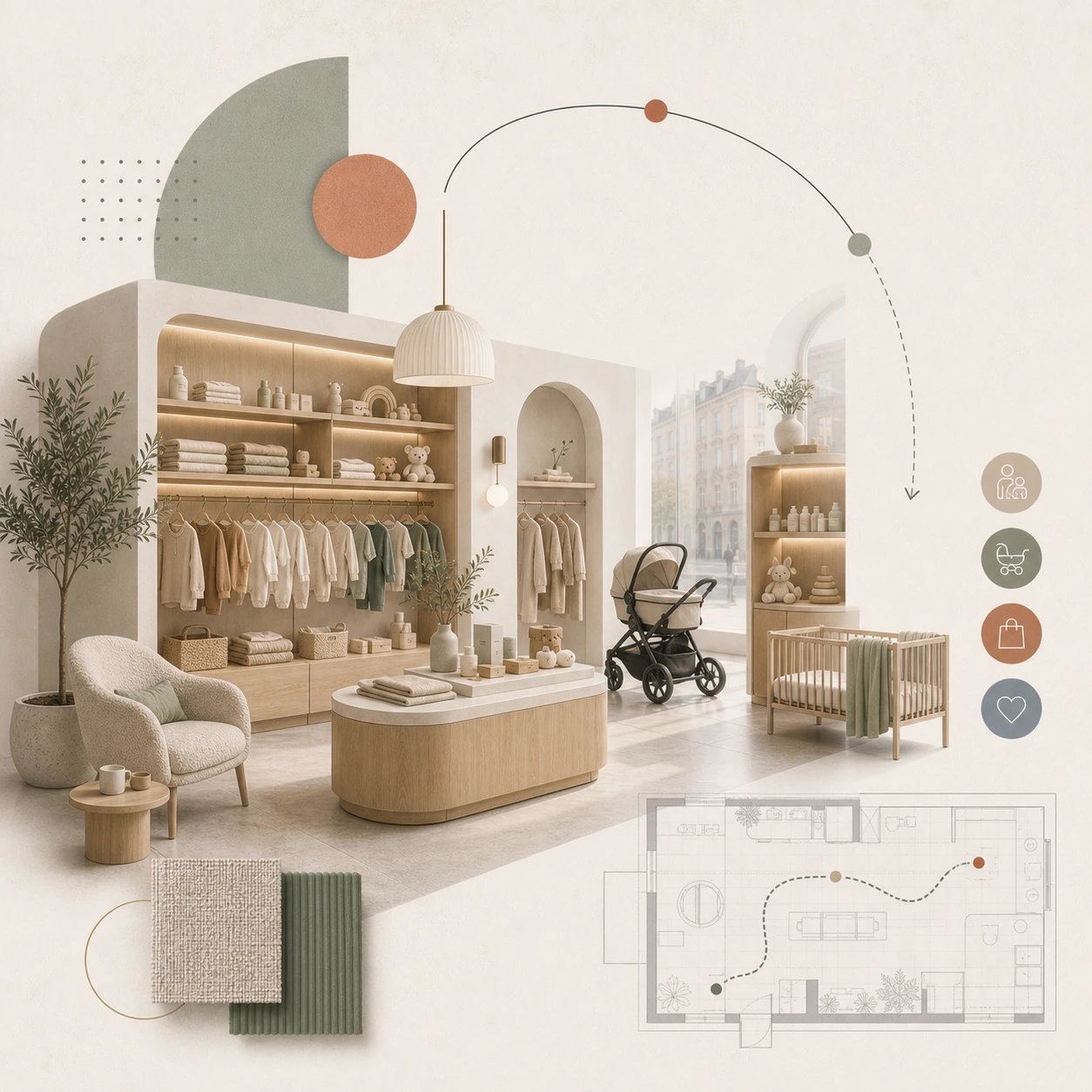
A children's store in Stockholm sells safety as much as products. Parents don't just buy strollers, baby clothes, beds, textiles, gifts or accessories. They buy the feeling that the store has made the right choice, knows what works and understands how sensitive a purchase for children can be.
This makes the children's store different from regular retail. The customer may be pregnant, stressed, a new parent, a gift buyer or a family with a stroller. The space needs to be warm without being cluttered, premium without feeling cold and commercial without pushing the customer.
Store design costs for a children's store in Stockholm
- Small children's shop or baby shop, 40 to 80 sqm: 10,000 to 16,000 SEK/sqm including shelving systems, lighting and checkout zones
- Medium-sized children's store with stroller display and fitting room, 80 to 160 sqm: 14,000 to 22,000 SEK/sqm with special displays, softer lighting design and wider aisles
- Premium concept with showroom for strollers and baby furniture, 150 to 300 sqm: 20,000 to 28,000 SEK/sqm with customized furniture, lighting design and consultation zone
Trust starts at the entrance
A children's store must feel easy to enter. Too narrow an entrance, high product walls or unclear planning make strollers and families hesitate. An open entrance, clear visibility and a calm first zone create confidence. The first thing the customer sees should not be everything. It should be a clear signal: baby, stroller, gift, bedroom, textile, quality or local identity.
Premium products need calm presentation
Strollers, beds, textiles and higher-priced baby products need space and explanation. If they are too close together, they feel cheaper. If they are displayed with the right light, materials, spacing and information logic, the price becomes easier to understand.
This is particularly important for products where the customer needs advice. A stroller should fit the home, stairs, car, storage and everyday movements. The store needs to make room for that kind of decision, not rush the customer through it.
The gift buyer needs quick help
Not all customers are parents. Many come in for baptism, birthday, baby shower or first visit to newborn. They need age, budget and gift type quickly. Zones for 0 to 6 months, 6 to 12 months, 1 to 2 years, textile, small gifts and premium gifts make the store easier to shop in.
Gift wrapping, cards and small add-ons near the checkout can become a strong part of the store's service and make it more memorable as a local operator.
Common mistakes in children's store design
Mistake 1: Too narrow entrance and aisles
A stroller that barely fits in the entrance or cannot pass through the aisles stops the core target group at the door. Wider aisles cost space but actually increase conversion for the store's key customers.
Mistake 2: Mixing all product categories without logic
A pregnant customer looking for a bed and a gift buyer looking for baby clothes need different parts of the store. If everything is mixed without clear logic, the buying process takes longer and the customer buys with less certainty. Clear categorization increases average order value.
Mistake 3: Cold or sterile lighting
Cold white lighting in a children's store gives the feeling of stock rather than caring service. Warm lighting (2 700 to 3 000 K) with accent lights on products creates the right feeling and makes textiles and baby furniture more attractive to touch and buy.
Mistake 4: Weak digital presence
Children's stores get a lot of traffic from local searches. If Google Business lacks images, opening hours and a sense of assortment, the store loses visitors who would otherwise have come in. The strength of the physical store must be visible digitally to attract new customers.
Planning a children's or baby shop in Stockholm?
Eolos works with store design for children's stores in Stockholm: from flow and stroller logic to product zones, light, materials, branding and digital presence. Tell us about the space: address or area, size, target audience and concept.