
Blog
Pediatric Clinic in Stockholm: Clinic Design for Children, Parents and Safe Care Experience
Subscribe
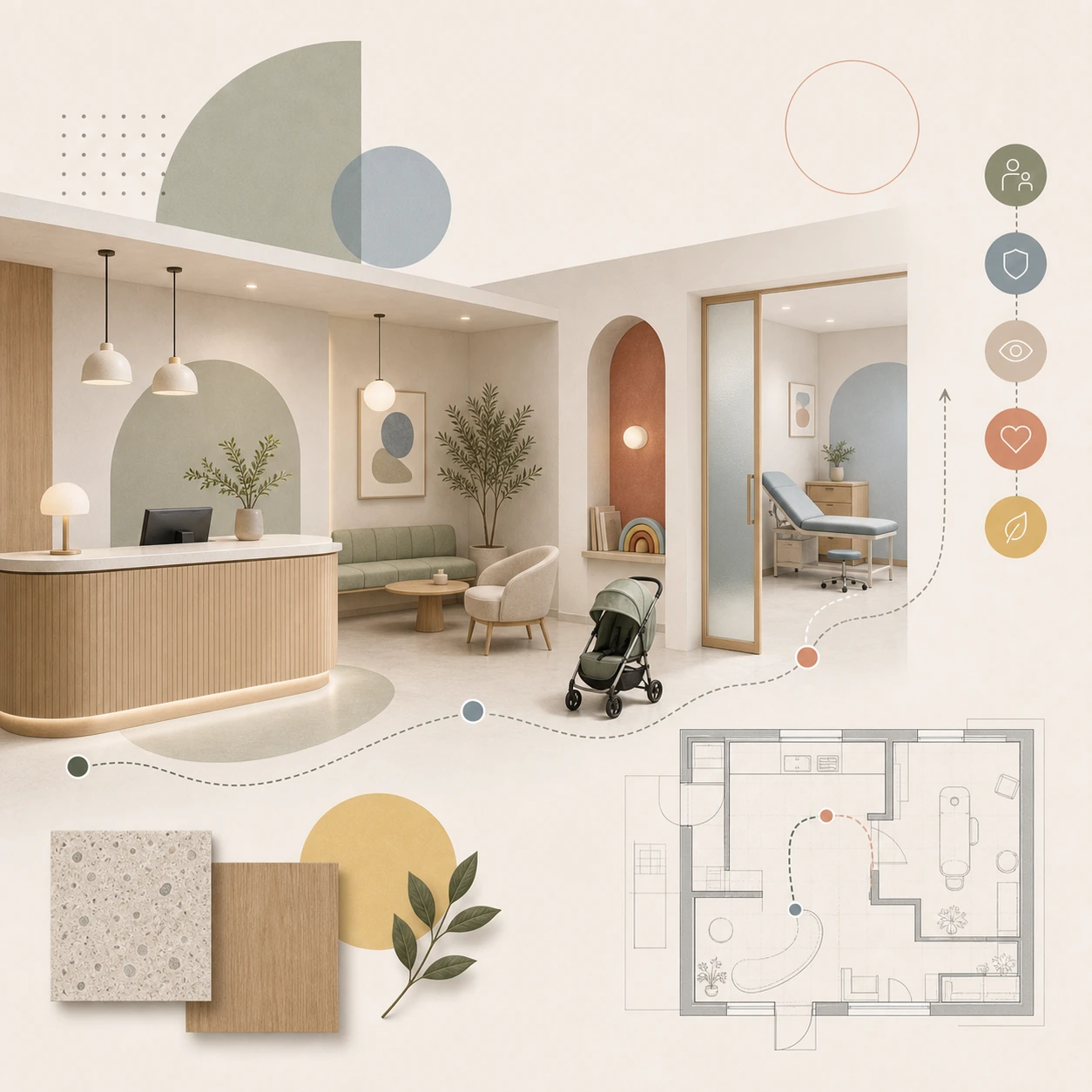
A pediatric clinic in Stockholm needs to be designed for two users at once: the child and the parent. The child needs security, calm, clarity and something that reduces anxiety. The parent needs trust, control, privacy and the feeling that the clinic knows what it is doing. Staff need a working environment that supports care, hygiene, flow and quick recovery between visits.
This makes pediatric clinics more complex than many other healthcare settings. They shouldn't feel like a playground, but they shouldn't feel cold or scary either. A strong pediatric clinic is warm, clear and professional. It helps the child to understand, the parent to feel in control and the staff to work without unnecessary friction.
Cost of children's clinic in Stockholm
- Small pediatric clinic with reception and 2 to 3 treatment rooms, 80 to 150 sqm: 16,000 to 24,000 SEK/sqm including ventilation, hygiene adaptation and child-friendly furnishings
- Medium-sized pediatric clinic with waiting rooms, examination rooms and staff areas, 150 to 300 sqm: 20,000 to 30,000 SEK/sqm with acoustics, lighting design and separate flow zones
- Multi-disciplinary pediatric specialist clinic, 300 sqm and above: 26,000 to 38,000 SEK/sqm with specialized equipment, advanced acoustics and premium installations
Hidden costs that are often missing
Ventilation upgrade for high occupancy and hygiene: 150 000 to 350 000 SEK. Acoustic insulation between treatment rooms: SEK 400 to 800 per square meter of wall. Child-friendly, hygiene-rated materials: 20 to 40 percent premium over standard materials. These items are often missing in the early calculations.
The waiting room is a stress zone
The waiting room in a pediatric clinic has to deal with waiting, anxiety, strollers, siblings, infection splashes, noise and parents needing information. A row of chairs along the wall is not enough. It creates a sense of passive waiting, while children move around, parents try to read instructions and staff need to keep the flow going.
Good design creates small zones, clear flows, seating for adults, safe space for children, easy-to-clean materials and acoustics that reduce stress. Children should be able to find their way around. The parent should understand where the check-in, toilet, stroller, treatment room and exit are without asking several times.
Child-friendly does not mean childish
Pediatric clinics need warmth, but not visual chaos. Too many colors, shapes, patterns and stimuli can increase stress, especially for children who are already anxious or tired. A better approach is calm base materials, some clear child-friendly details, soft shapes where needed and light that doesn't feel harsh.
Child-friendly can be in the proportions, sight lines, a safe corner, a wall feature, a ceiling view of the examination area, a low shelf or a material that feels less institutional. The environment should help the child feel that the place is safe, not overstimulate before the care encounter has even started.
The treatment room should support care and explanation
Children often need to understand what is going to happen. Parents need to be able to be close without obstructing staff. The room needs to be planned for staff flow, equipment, hygiene, parent positioning, the child's line of sight and calm communication. What the child sees from the examination site matters: ceiling, light, wall, door, instruments and staff movement.
A common weakness is that the treatment room is only technically planned. The equipment is there, but the parent stands wrong, the door feels exposed, storage is too visible or the light is harsh. Where can the parent sit? Where are siblings waiting? How quickly can staff find materials? What needs to be hidden and what needs to be visible?
Hygiene and materials without the cold feeling
Pediatric clinics require materials that can withstand cleaning, spills, carts, hands and intensive use. But durability must not make the environment harsh. The materials strategy must combine hygiene, warmth and longevity. Floors, wall coverings, furniture, textiles, washing surfaces and play areas need to be chosen with both operation and feel in mind.
Acoustics are part of safety. Children's noises, anxiety, conversations at reception and sounds from treatment rooms can quickly make the environment stressful. Proper acoustic planning protects privacy, lowers noise levels and makes staff communication clearer.
Common mistakes in pediatric clinic design in Stockholm
Mistake 1: Overstimulating the waiting room
Many pediatric clinics try to make the waiting room fun with bright colors, patterns and figures on all the walls. The result can increase stress in children who are already anxious. Calm, warm base materials with a few well-chosen child-friendly details work better than a room that screams activity.
Mistake 2: Treatment rooms without space for parents
If the parent cannot sit comfortably close to the child during the examination, the child's anxiety increases. A chair in the right place, a clear line of sight and the feeling that the parent is close costs nothing in planning but makes a big difference in how the visit is experienced.
Mistake 3: Ignoring acoustics between rooms
Noise from a treatment room heard in the waiting room creates anxiety for parents and children waiting. It affects the perception of safety and trust in the clinic. Acoustic insulation between rooms is a basic requirement, not an add-on.
Mistake 4: Save on stroller logistics
The entrance, elevators, hallways and waiting room must be able to accommodate strollers without families having to maneuver. A room that is difficult to enter with a stroller signals that the clinic has not thought about its patients. It is one of the easiest problems to solve at the planning stage and one of the most expensive to fix afterwards.
Are you planning a children's clinic or pediatric practice in Stockholm?
Eolos works with pediatric clinics in Stockholm: from waiting rooms and treatment rooms to parental flow, hygiene, lighting, acoustics, branding and digital presence. Tell us about the premises: address or area, size, activities and goals.