
Blog
Flower shop in Stockholm: Store design for Season, Scent, Flow and Impulse Buying
Subscribe
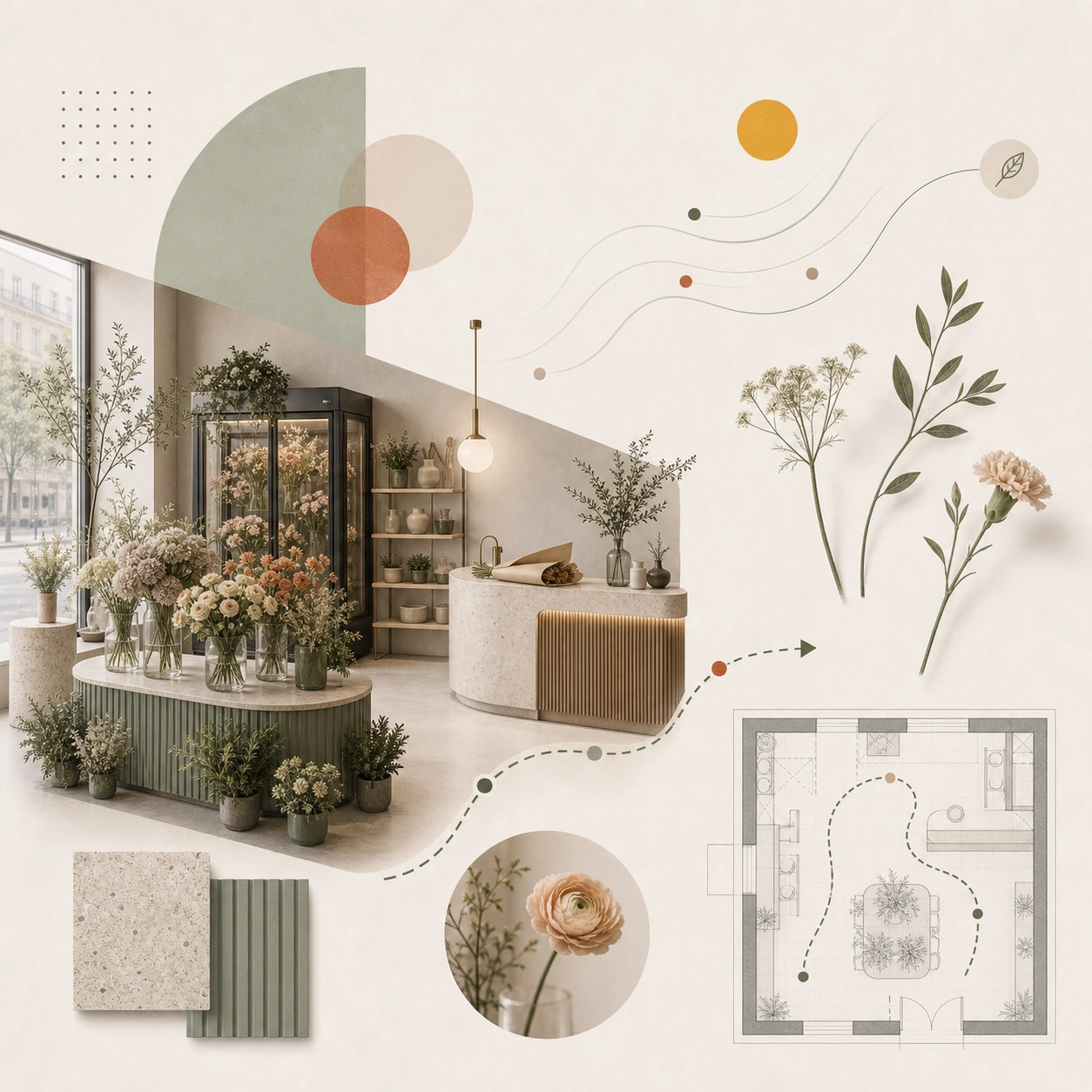
A flower shop in Stockholm sells moments. A bouquet on the way home, a gift, an event, a wedding, a funeral, an office or a small everyday mark. The customer often buys quickly, but the feeling must be right. The shop needs to be both practical and emotional at the same time.
The shop design should support production and poetry. The florist needs workspace, water, refrigeration, storage, delivery logic and cleanability. The customer needs color, scent, seasonality, clear price points and an easy path to purchase. If the two needs are not met, the shop will either be beautiful but difficult to run, or efficient but without desire.
Costs for flower shop design in Stockholm
- Small flower shop, 20 to 50 sqm: 10,000 to 16,000 SEK/sqm including counters, fridge, flooring and lighting
- Medium-sized flower shop with workspace and gift zone, 50 to 100 sqm: 14,000 to 22,000 SEK/sqm with special lighting, cooling integration and customer flow optimization
- Florist studio with wedding consultation and events, 80 to 150 sqm: 18,000 to 26,000 SEK/sqm with separate areas, premium counters and branding
Hidden costs that are often missing
Water resistant floors and walls in the production zone: 500 to 1 200 SEK per sqm. Cooling units with exposure area: 30 000 to 80 000 SEK depending on capacity. Drainage and water connections for work areas: €20 000 to €50 000. These items are often missing from the initial calculation.
The shop window will live with the season
Flowers are one of the strongest shop window products, but only if the presentation is clear. Too much variety can look cluttered from the street. A seasonal theme, a color scheme, or a clear gift idea makes the window more marketable. In Stockholm, where many purchases are made on the way between home, office, dinner and public transport, the shop window must create a quick reason to stop.
Flow and workspace must work together
The florist's workspace is often visible. This can be a strength if it is well organized, but a weakness if it is cluttered. Customers want to see the craftsmanship, but not feel that it gets in the way of production. The shop needs to distinguish between customer area, workspace, stock, refrigeration and deliveries without losing the feeling of a living studio.
A weak plan leaves bouquets tied up at the checkout, water buckets blocking aisles and deliveries disrupting customer flow. A strong plan allows production, sales and service to support each other.
Common mistakes in flower shop design
Mistake 1: No separation between customer area and production area
When the florist ties bouquets in the same zone as the customer chooses products, friction is created for both. The customer feels in the way and the florist loses peace of mind. A clear separation, even in a small space, improves both customer experience and work rate.
Mistake 2: Refrigeration that is not part of the shopping experience
A fridge tucked into a corner or hidden behind production equipment misses the opportunity to sell. Refrigeration display can be one of the strongest selling points in a flower shop if the products are displayed with the right lighting and clear pricing logic.
Mistake 3: Too weak a shop window
Many flower shops display all products in the window with no theme or direction. It creates an impression of high energy but no concrete reason to enter. A well-chosen theme with a clear offer and good light converts passers-by into visitors in a way that a full window rarely does.
Mistake 4: Ignoring the checkout zone as a sales area
Cards, vases, scented candles, ceramics and seasonal products near the checkout are one of the easiest ways to increase the average value per purchase. If the checkout zone is just terminal and queue, a large part of the additional sales is lost every day.
Planning a flower shop or florist studio in Stockholm?
Eolos works with flower shop design in Stockholm: from season and shop window to florist flow, refrigeration, materials, gift logic, branding and local visibility. Tell us about the premises: address or area, size, assortment and goals.