
Blog
Cafe Design in Stockholm: Specialty Coffee, Flow and Why Small Venues Must Sell Smart
Subscribe
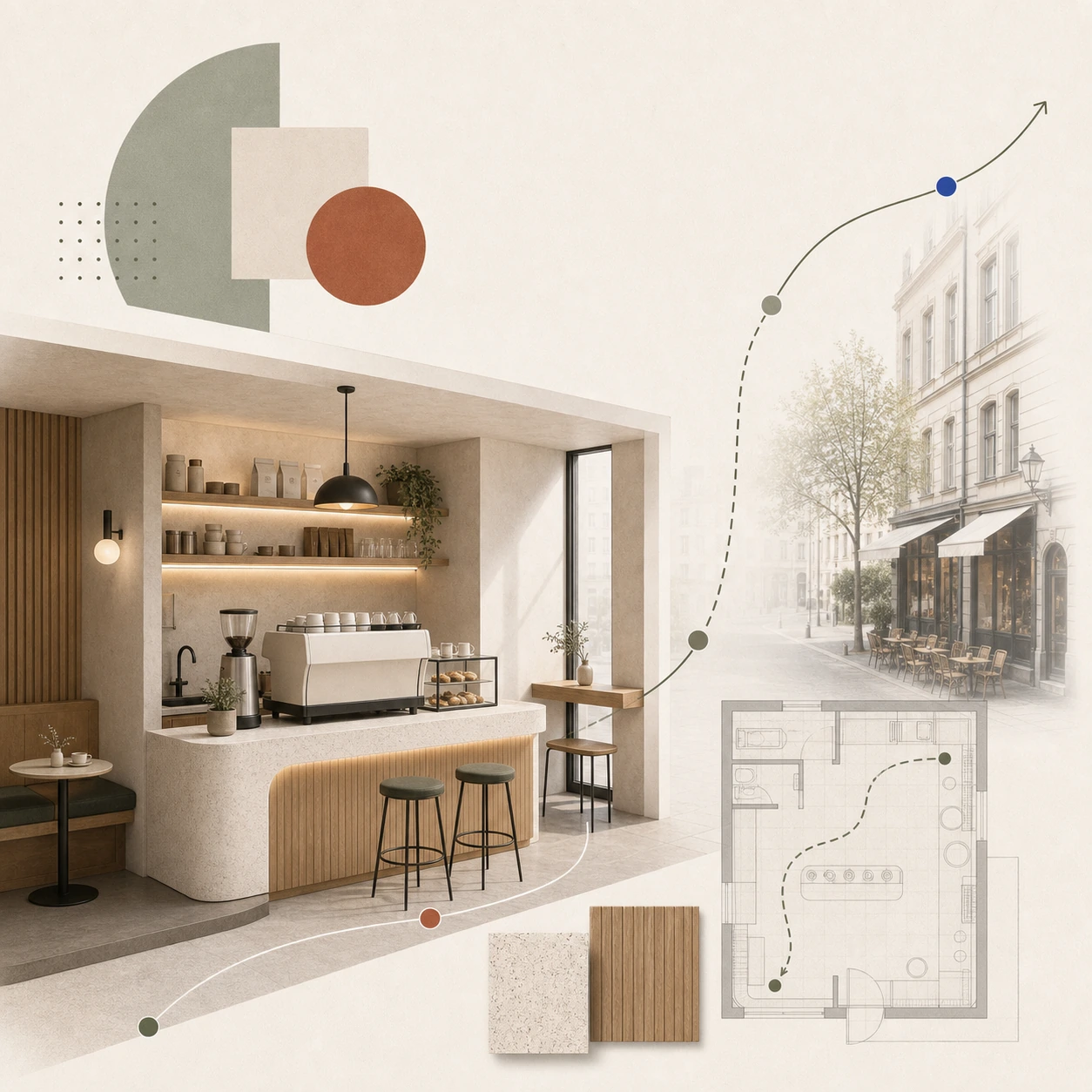
A café in Stockholm often has less space than the business model actually needs. Barista, queue, take-away, seating, deliveries, dishes, pastries, coffee equipment and payment must all work in a few square meters. Café design is therefore not primarily a question of style. It's a question of flow, pace and how every meter helps sales.
Stockholm has a strong coffee culture and an audience that quickly recognizes the difference between a well-thought-out concept and a room that just happens to sell coffee. This applies to Södermalm, Vasastan, Östermalm, Kungsholmen, City, Hornstull and smaller local locations where returning guests determine profitability.
Coffee shop design costs in Stockholm
- Small café with take-away focus, 30 to 60 sqm: 10,000 to 16,000 SEK/sqm renovation including bar, electricity, water and lighting
- Specialty coffee bar with seating, 60 to 100 sqm: 14,000 to 22,000 SEK/sqm with bar, acoustics, lighting design and interior
- Café-restaurant or day café with kitchen, 100 to 180 sqm: 18,000 to 28,000 SEK/sqm with kitchen, ventilation, fire protection and full furnishing
Hidden costs that are often not included in the calculation
Ventilation installation for coffee equipment and kitchen: 80,000 to 250,000 SEK depending on the starting position of the premises. Special lighting for bar and pastry counters: €30 000 to €80 000 Acoustic treatment in a hard-surfaced room: SEK 40 000 to 100 000 Water and sewage for washing stations and espresso machines: €20 000 to €60 000. These items are often missing from the early calculations and can represent 25 to 35% of the total cost.
The bar is the engine
In a café, the bar is not just furniture. It is production, sales, queue management, branding and stage. If the bar is misaligned, staff lose time all day. Espresso machine, grinder, fridge, display, cash register, water, dishes, waste and take-away must be located so that staff can move around quickly and clearly.
An extra meter of unnecessary movement per order adds up to a lot of money when the venue makes hundreds of purchases per day. The best coffee bar is not the longest. It is the one that makes ordering, payment, production and collection understandable for both customers and staff.
Queue flow must not kill the seating
Small cafés often fail because the queue ends up where customers should be sitting. The customer at the table feels crowded, the customer in the queue doesn't know where to stand, and staff have to deal with friction that the layout should have solved.
A good café needs a clear ordering point, a separate waiting area if the volume requires it, a pick-up logic and seating that is not blocked by the take-away flow. In Stockholm, where many cafés operate with both fast morning traffic and longer afternoon sittings, the space needs to cope with two rhythms.
Specialty coffee requires more than fancy equipment
Specialty coffee customers read the room carefully. They look at the machine, the light, the cups, the menu, the materials, the barista's workflow and how clear the concept is. The equipment signals level, but is not enough. If the space feels cheap, cluttered or poorly lit, the price becomes harder to justify.
The design should help the customer experience the product as more valuable before the first sip. It's about the material of the bar, the light on the pastries, the readability of the menu, cup service, acoustics and how the staff's work becomes part of the experience.
Seating is a business strategy
Not all seating has the same function. A café near the metro or offices may need more short seating, standing room and quick take-away. A café in a residential area may benefit from longer stays, softer acoustics and more of a living room feel. The problem comes when you mix everything without a strategy.
Too many laptop seats can reduce turnover. Too few comfortable seats can kill afternoon sales. Poor acoustics make customers leave faster than planned. The right seating strategy depends on location, ticket, opening hours and the type of customer you want to bring back.
Common mistakes in café design in Stockholm
Mistake 1: Drawing the bar without testing the workflow
A bar that looks good but forces staff to take three extra steps per order costs time and money every day. The bar should be designed in collaboration with the person who will work behind it. Go through the entire ordering process step by step before locking in the solution.
Mistake 2: Planning the queue last
Where guests stand when the venue is full is a design decision. If left to chance, seating is blocked, staff are disturbed and guests leave without having ordered. Queue flow should be part of the layout from day one.
Mistake 3: Underestimating acoustics
Concrete ceilings, tiled floors and glass facades look good but create a sound environment that drives guests to drink quickly and leave. An investment of SEK 40 000 to 100 000 in absorbers, panels and the right choice of furniture can be the most profitable item in the whole project.
Mistake 4: Ignoring the ventilation requirements for coffee equipment
Espresso machines and kitchens generate heat and moisture that standard office ventilation cannot handle. If not investigated at the project stage, this can lead to requirements for post-opening measures, resulting in downtime.
Are you planning a café or coffee bar in Stockholm?
Eolos works with café design in Stockholm: from bar flow and seating strategy to lighting, acoustics, materials, branding and digital presence. Tell us about your space: address or neighborhood, size, concept, and whether it's a new opening or renovation.