
Blog
Turnkey 2.0: Why Architect and Web Agency Must Be in the Same Contract
Subscribe
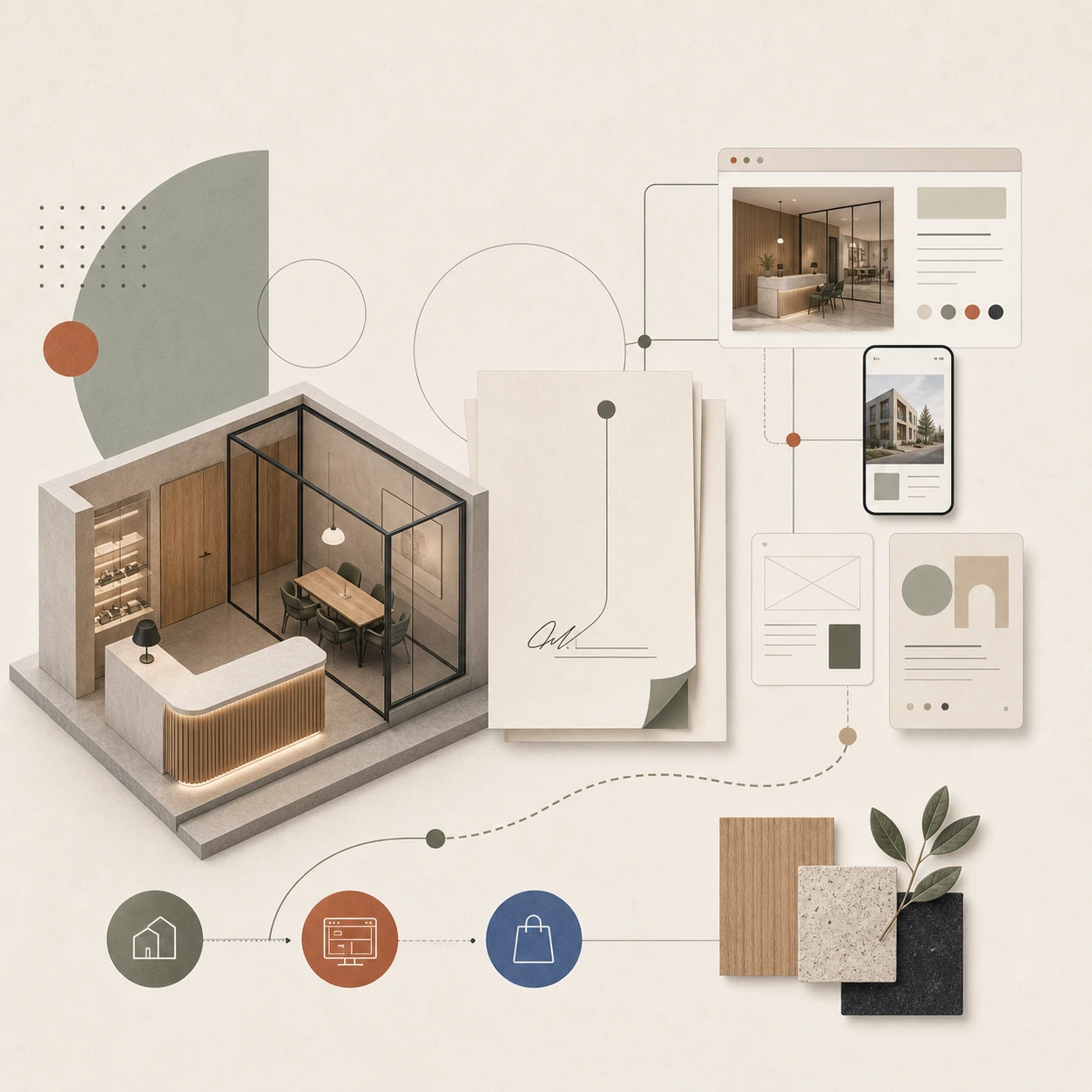
The word turnkey sounds safe. One contract. One responsible party. One overall delivery of the construction. For many commercial projects in Sweden, it has been the obvious solution when a restaurant, shop, clinic or office environment is to be rebuilt.
The problem is that traditional turnkey projects often stop at the physical premises. Once the walls are painted and the furniture is in place, what remains is the actual revenue generation: website, booking system, e-commerce, payment flows, digital advertising, Google Business, content, photography, launch campaign and operational testing.
This is where many openings lose power. The venue is almost ready, but the online brand is not. The POS system interferes with the bar. Screens and cables are installed as afterthoughts. The booking flow says one thing, the floor plan another. The result is not a launch moment. It's a patchwork quilt.
Where the old model breaks down
The classic model divides the project into separate deliverables. An architect or interior design studio develops the concept. A contractor builds. A web agency makes the site. A photographer comes in late. A marketer tries to create campaign materials from a project they had no hand in shaping.
Each player may be doing their job. But no one owns the whole picture between the room, the technology, the launch and the customer journey. It's not a small detail. For commercial premises, the whole is the product. A restaurant doesn't just sell food. It sells booking, arrival, sound, light, service, payment, memory and return visits. A clinic doesn't just sell treatment. It sells trust before, during and after the visit.
When those parts are built in different systems, friction occurs. Friction costs money.
Turnkey 2.0 starts before the drawing
Turnkey 2.0 does not mean adding a website at the end. It means planning the shop, the premises and the digital infrastructure at the same time. Already in the first draft, the project needs to answer questions that have traditionally been left too late.
How will the customer find the business? How do they book or buy? Where in the premises do digital touchpoints need to be integrated? Which areas need to be photographed for launch? How will staff work with POS, stock, order flows and customer data? Which elements need to be tested before opening, not after?
When the answers are found early, the architecture can carry the deal. The bar counter can accommodate technology without visible compromise. The entrance can support both walk-in and pre-booked guests. The store's Click & Collect zone can be a natural part of the flow. The clinic can make the digital booking experience credible through the same in-room precision.
The authority process is also part of the launch
Many commercial premises require a building permit, notification, technical consultation, control plan, start notice or final notice depending on the measure and use. The National Board of Housing, Building and Planning describes the control plan as a document that shows which controls are needed to ensure that society's requirements under the Planning and Building Act can be met. The start notice establishes, among other things, the control plan and the documents to be submitted for the final notice.
This is not just official language. It is the calendar for your opening. If ventilation, fire protection, accessibility, installations or documentation don't add up, the project can come to a standstill, even if the design looks finished. And if a final certificate is required, the building cannot normally be put into use until it has been granted.
An integrated studio uses this time actively. While technical issues are being dealt with, the web, content, booking system, Google Business structure, launch campaign and internal operations can be built in parallel. Waiting time becomes preparation time.
Digital is not marketing. It is operations.
Many companies treat web and digital systems as communication. That is too narrow. In a modern commercial space, digital infrastructure is part of the operation. Bookings drive staffing. E-commerce drives inventory. POS influences furniture design. Screens, QR, memberships, loyalty programs and customer flows affect how people move around the space.
If the web agency doesn't understand the space, it often builds a flow that the space cannot deliver. If the architect doesn't understand the digital customer journey, they often design a space that looks good but creates unnecessary friction in buying, booking or servicing.
That's why the architect and the web team need to be in the same agreement, not because it sounds modern, but because the decisions are interdependent.
What Eolos takes responsibility for
Eolos works with commercial spaces where the physical experience and the digital launch must carry the same business. Restaurants, hotels, clinics, offices, coworking, retail and premium services require different solutions, but the same basic principle: the room and the system must talk to each other.
We start with the use, not the space. What should the space do for the business? What customer journey must it support? What technical requirements could stop the project? What digital infrastructure is needed to make the opening work? Next, we coordinate architecture, interior design, technical documents, material choices, digital identity and launch logic.
It is not a major process for the sake of it. It's a more realistic process for businesses where opening dates, first impressions and operational precision actually affect revenue.
When this model is right
Turnkey 2.0 is particularly relevant when the space needs to generate sales directly: restaurants with booking flows, shops with e-commerce, clinics with digital appointment booking, offices to strengthen recruitment, hotel environments with direct booking or coworking projects where the community platform is as important as the lounge.
If the project is just about repainting and changing furniture, this level is not needed. But if the space is to open as a complete commercial system, the contract needs to reflect that. Otherwise, you build the space first and then try to invent the business around it.
Sources to check in the construction process
For projects involving permits, notifications or technical inspections, the National Board of Housing, Building and Planning's guidance on start message, control plan and final notice good starting points. They are not a substitute for project-specific advice, but they show why technical coordination and commercial timing must go hand in hand.
Are you planning a commercial space in Stockholm or the rest of Sweden and want to bring together architecture, interior design and digital launch in the same process? Use the form below.