Kafédesign i Stockholm: specialty coffee, flöde och varför små lokaler måste sälja smart
Guide till kafédesign i Stockholm: barflöde, barlayout, sittplatser, take-away, specialty coffee och hur små lokaler säljer mer per kvadratmeter.
Hospitality · 2026-05-20
Guide · EOLOS DESIGN LAB Journal
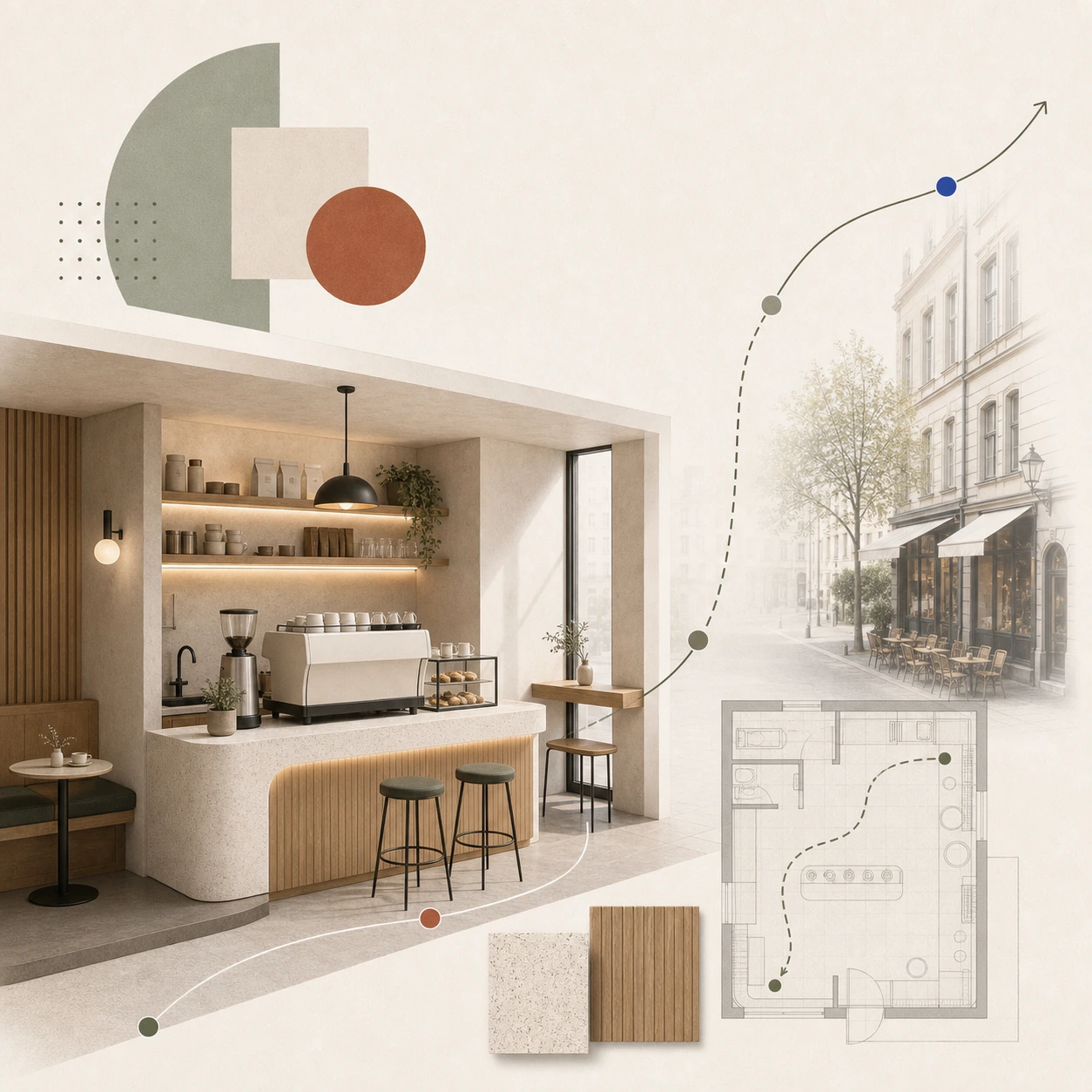
Ett kafé i Stockholm har ofta mindre yta än affärsmodellen egentligen behöver. Barista, kö, take-away, sittplatser, leveranser, disk, bakverk, kaffeutrustning och betalning ska fungera på få kvadratmeter. Kafédesign är därför inte primärt en fråga om stil. Det är en fråga om flöde, tempo och hur varje meter hjälper försäljningen.
Stockholm har en stark kaffekultur och en publik som snabbt känner skillnaden mellan ett genomtänkt koncept och ett rum som bara råkar sälja kaffe. Det gäller Södermalm, Vasastan, Östermalm, Kungsholmen, City, Hornstull och mindre lokala lägen där återkommande gäster avgör lönsamheten.
Kostnader för kafédesign i Stockholm
Litet kafé med take-away-fokus, 30 till 60 kvm: 10 000 till 16 000 kr/kvm renovering inklusive bar, el, vatten och belysning
Specialty coffee-bar med sittplatser, 60 till 100 kvm: 14 000 till 22 000 kr/kvm med bardisk, akustik, ljusdesign och inredning
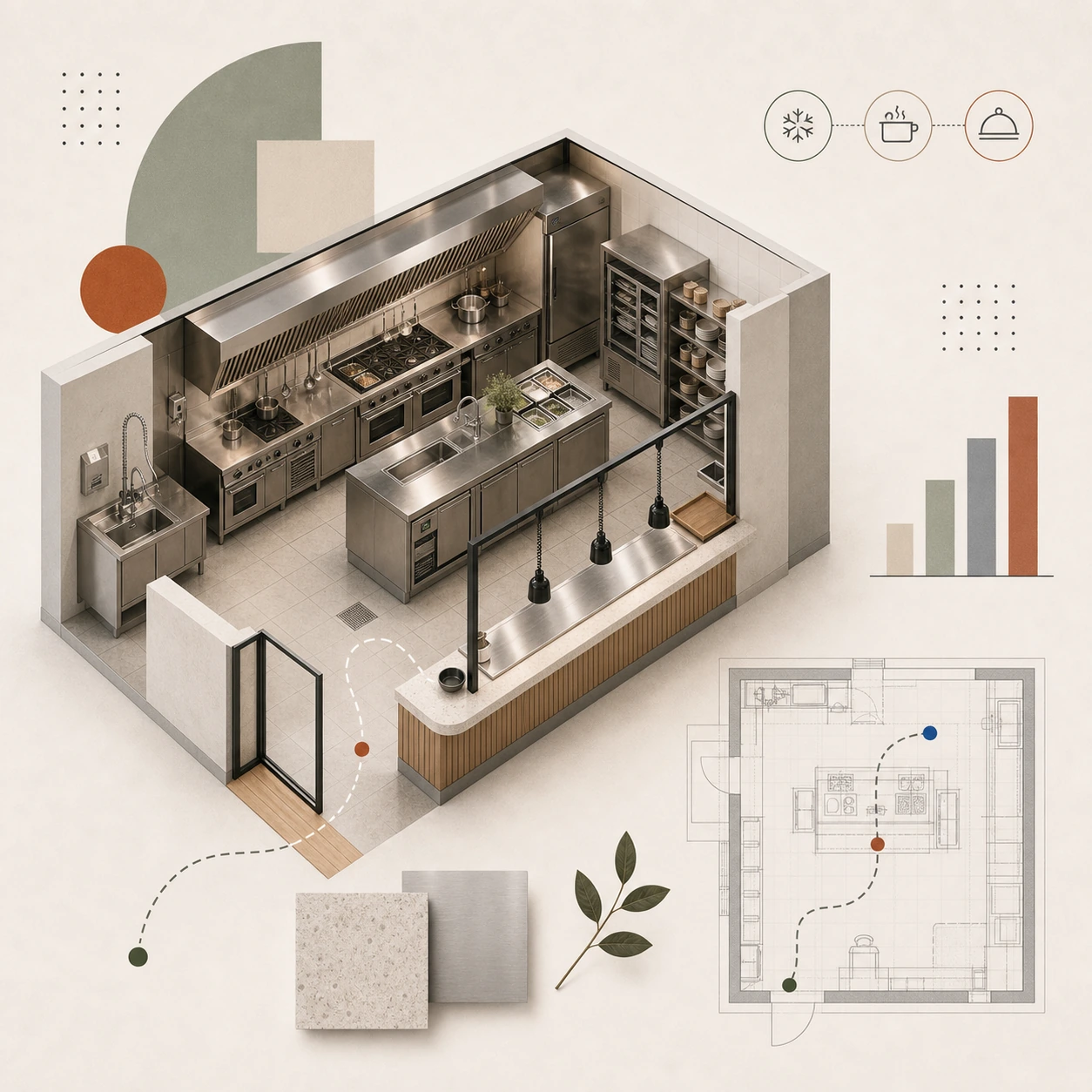
Kaférestaurang eller dagkafé med kök, 100 till 180 kvm: 18 000 till 28 000 kr/kvm med kök, ventilation, brandskydd och full inredning
Dolda kostnader som ofta saknas i kalkylen
Ventilationsinstallation för kaffeutrustning och kök: 80 000 till 250 000 kr beroende på lokalens utgångsläge. Specialbelysning för bardisk och bakverk: 30 000 till 80 000 kr. Akustikbehandling i lokal med hårda ytor: 40 000 till 100 000 kr. Vatten och avlopp för tvättstationer och espressomaskiner: 20 000 till 60 000 kr. Dessa poster saknas ofta i de tidiga kalkylerna och kan motsvara 25 till 35 procent av totalkostnaden.
Baren är motorn
I ett kafé är bardisken inte bara möbel. Den är produktion, försäljning, köhantering, varumärke och scen. Om baren är felritad tappar personalen tid hela dagen. Espressomaskin, kvarn, kyl, display, kassa, vatten, disk, avfall och take-away måste ligga så att personalen rör sig kort och tydligt.
En extra meter onödig rörelse per beställning blir mycket pengar när lokalen gör hundratals köp per dag. Den bästa kafébar är inte den längsta. Den är den som gör beställning, betalning, produktion och upphämtning begriplig för både kund och personal.
Köflödet får inte döda sittplatserna
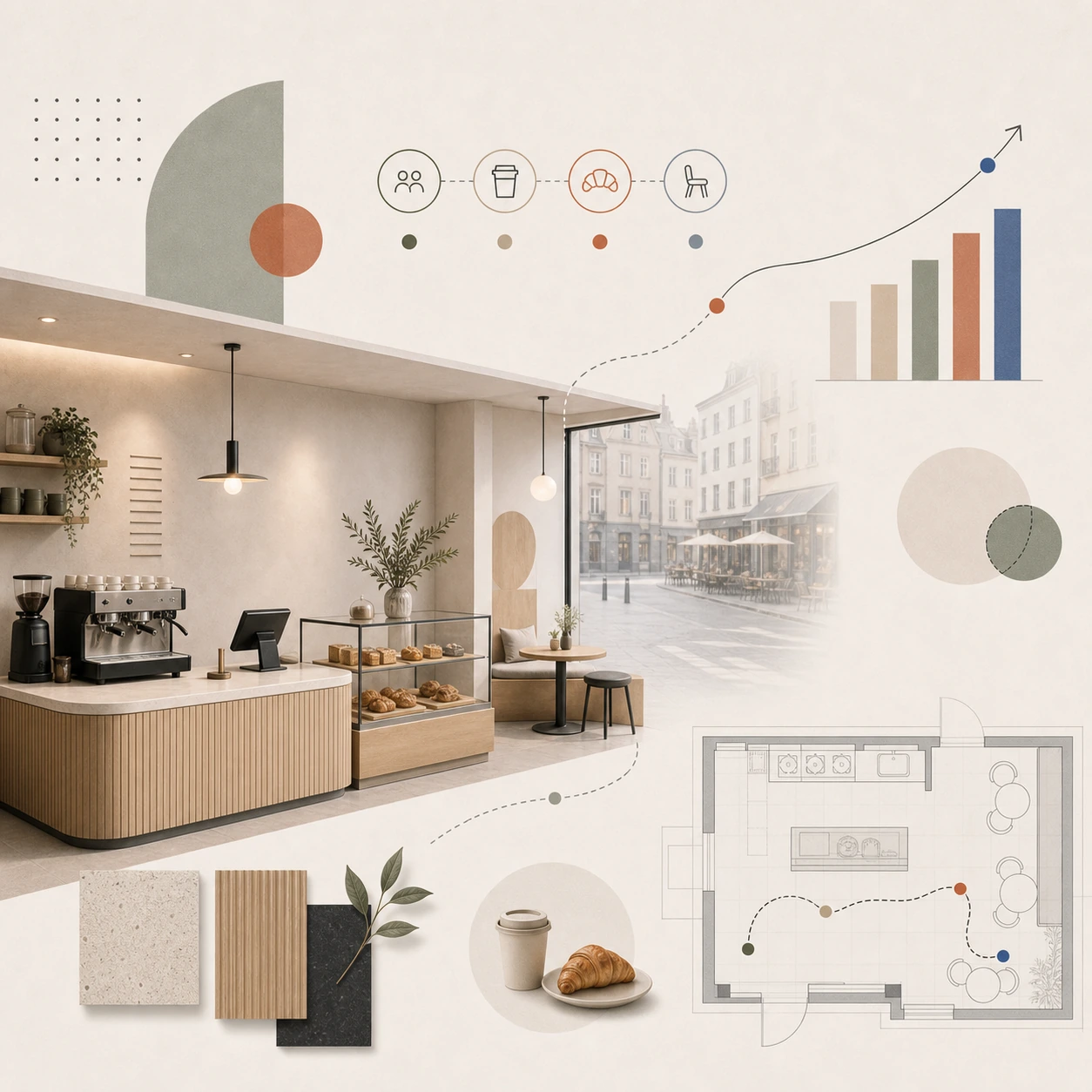
Små kaféer misslyckas ofta för att kön hamnar där gäster egentligen ska sitta. Kunden vid bordet känner sig inträngd, kunden i kön vet inte var den ska stå och personalen får hantera friktion som planlösningen borde ha löst.
Ett bra kafé behöver en tydlig beställningspunkt, en separat väntzon om volymen kräver det, en upphämtningslogik och sittplatser som inte blockeras av take-away-flödet. I Stockholm, där många kaféer arbetar med både snabb morgontrafik och längre sittningar på eftermiddagen, måste lokalen klara två rytmer.
Specialty coffee kräver mer än snygg utrustning
Specialty coffee-kunder läser rummet noggrant. De tittar på maskinen, ljuset, kopparna, menyn, materialet, baristans arbetsflöde och hur tydligt konceptet är. Utrustningen signalerar nivå, men räcker inte. Om lokalen känns billig, rörig eller dåligt ljussatt blir priset svårare att försvara.
Designen ska hjälpa kunden att uppleva produkten som mer värdefull innan första klunken. Det handlar om bardiskens material, ljus på bakverk, menyns läsbarhet, koppservering, akustik och hur personalens arbete blir en del av upplevelsen.
Sittplatser är en affärsstrategi
Alla sittplatser har inte samma uppgift. Ett kafé nära tunnelbana eller kontor kan behöva fler korta sittningar, ståplatser och snabb take-away. Ett kafé i ett bostadsområde kan vinna på längre vistelser, mjukare akustik och mer vardagsrumskänsla. Problemet uppstår när man blandar allt utan strategi.
För många laptop-platser kan sänka omsättning. För få bekväma platser kan göra att eftermiddagsförsäljningen dör. För dålig akustik gör att gäster lämnar snabbare än planerat. Rätt sittstrategi beror på läge, ticket, öppettider och vilken typ av kund man vill få tillbaka.
Vanliga misstag vid kafédesign i Stockholm
Misstag 1: Rita baren utan att testa arbetsflödet
En bardisk som ser bra ut men tvingar personalen att ta tre steg extra per beställning kostar tid och pengar varje dag. Baren ska ritas i samarbete med den som ska arbeta bakom den. Gå igenom hela beställningsprocessen steg för steg innan lösningen låses fast.
Misstag 2: Planera kön sist
Var gästen ställer sig när lokalen är full är ett designbeslut. Om det lämnas åt slumpen blockeras sittplatser, personal störs och gäster lämnar utan att ha beställt. Köflödet ska vara en del av layouten från dag ett.
Misstag 3: Underskatta akustiken
Betongtak, kakelgolv och glasfasad ser bra ut men skapar en ljudmiljö som driver gäster att dricka snabbt och gå. En investering på 40 000 till 100 000 kr i absorbenter, paneler och rätt möbelval kan vara den mest lönsamma posten i hela projektet.
Misstag 4: Ignorera ventilationskraven för kaffeutrustning
Espressomaskiner och kök genererar värme och fukt som standard kontorsventilation inte hanterar. Om detta inte utreds i projektstadiet kan det leda till krav på åtgärder efter öppning, med driftsstopp som följd.
Planerar ni ett kafé eller en coffee bar i Stockholm? Berätta om projektet via kontaktalternativen nedan.
A café in Stockholm often has less space than the business model actually needs. Barista, queue, take-away, seating, deliveries, dishes, pastries, coffee equipment and payment must all work in a few square meters. Café design is therefore not primarily a question of style. It's a question of flow, pace and how every meter helps sales.
Stockholm has a strong coffee culture and an audience that quickly recognizes the difference between a well-thought-out concept and a room that just happens to sell coffee. This applies to Södermalm, Vasastan, Östermalm, Kungsholmen, City, Hornstull and smaller local locations where returning guests determine profitability.
Coffee shop design costs in Stockholm
Small café with take-away focus, 30 to 60 sqm: 10,000 to 16,000 SEK/sqm renovation including bar, electricity, water and lighting
Specialty coffee bar with seating, 60 to 100 sqm: 14,000 to 22,000 SEK/sqm with bar, acoustics, lighting design and interior
Café-restaurant or day café with kitchen, 100 to 180 sqm: 18,000 to 28,000 SEK/sqm with kitchen, ventilation, fire protection and full furnishing
Hidden costs that are often not included in the calculation
Ventilation installation for coffee equipment and kitchen: 80,000 to 250,000 SEK depending on the starting position of the premises. Special lighting for bar and pastry counters: 30,000 to 80,000 SEK Acoustic treatment in a hard-surfaced room: SEK 40,000 to 100,000 Water and sewage for washing stations and espresso machines: 20,000 to 60,000 SEK. These items are often missing from the early calculations and can represent 25 to 35% of the total cost.
The bar is the engine
In a café, the bar is not just furniture. It is production, sales, queue management, branding and stage. If the bar is misaligned, staff lose time all day. Espresso machine, grinder, fridge, display, cash register, water, dishes, waste and take-away must be located so that staff can move around quickly and clearly.
An extra meter of unnecessary movement per order adds up to a lot of money when the venue makes hundreds of purchases per day. The best coffee bar is not the longest. It is the one that makes ordering, payment, production and collection understandable for both customers and staff.
Queue flow must not kill the seating
Small cafés often fail because the queue ends up where customers should be sitting. The customer at the table feels crowded, the customer in the queue doesn't know where to stand, and staff have to deal with friction that the layout should have solved.
A good café needs a clear ordering point, a separate waiting area if the volume requires it, a pick-up logic and seating that is not blocked by the take-away flow. In Stockholm, where many cafés operate with both fast morning traffic and longer afternoon sittings, the space needs to cope with two rhythms.
Specialty coffee requires more than fancy equipment
Specialty coffee customers read the room carefully. They look at the machine, the light, the cups, the menu, the materials, the barista's workflow and how clear the concept is. The equipment signals level, but is not enough. If the space feels cheap, cluttered or poorly lit, the price becomes harder to justify.
The design should help the customer experience the product as more valuable before the first sip. It's about the material of the bar, the light on the pastries, the readability of the menu, cup service, acoustics and how the staff's work becomes part of the experience.
Seating is a business strategy
Not all seating has the same function. A café near the metro or offices may need more short seating, standing room and quick take-away. A café in a residential area may benefit from longer stays, softer acoustics and more of a living room feel. The problem comes when you mix everything without a strategy.
Too many laptop seats can reduce turnover. Too few comfortable seats can kill afternoon sales. Poor acoustics make customers leave faster than planned. The right seating strategy depends on location, ticket, opening hours and the type of customer you want to bring back.
Common mistakes in café design in Stockholm
Mistake 1: Drawing the bar without testing the workflow
A bar that looks good but forces staff to take three extra steps per order costs time and money every day. The bar should be designed in collaboration with the person who will work behind it. Go through the entire ordering process step by step before locking in the solution.
Mistake 2: Planning the queue last
Where guests stand when the venue is full is a design decision. If left to chance, seating is blocked, staff are disturbed and guests leave without having ordered. Queue flow should be part of the layout from day one.
Mistake 3: Underestimating acoustics
Concrete ceilings, tiled floors and glass facades look good but create a sound environment that drives guests to drink quickly and leave. An investment of SEK 40,000 to 100,000 in absorbers, panels and the right choice of furniture can be the most profitable item in the whole project.
Mistake 4: Ignoring the ventilation requirements for coffee equipment
Espresso machines and kitchens generate heat and moisture that standard office ventilation cannot handle. If not investigated at the project stage, this can lead to requirements for post-opening measures, resulting in downtime.
Planning a café or coffee bar in Stockholm? Tell us about it using the contact options below.