Vi utvecklar hållbara bostadsmiljöer, gemensamma ytor och skalbara designsystem för BTR-aktörer och långsiktiga hyresportföljer.
Verksamhet · kundresa · resultat
För vem · EOLOS DESIGN LAB
BTR-fastigheter och hyresportföljer · Stockholm och Sverige
BTR-segmentet i Sverige växer snabbt. Institutionella fastighetsägare, fonder och bostadsutvecklare bygger och förvärvar hyresportföljer med långsiktig avkastning som mål. I ett marknadsläge där hyresgästen har valmöjligheter är fastighetens utformning en direkt variabel för hyresintäkt, vakansgrad och fastighetsvärde. Vi designar BTR-fastigheter och hyresportföljer med det perspektivet: designen ska prestera på alla tre parametrarna, inte bara se bra ut på rendering.
Det verkliga problemet
En BTR-fastighet utan differentierad design konkurrerar enbart på hyra. Och hyran har alltid ett tak.
Hyresgästen väljer baserat på upplevd kvalitet. En väldesignad fastighet är det som skiljer den från de likvärdiga lägenheter hyresgästen tittar på samma dag, och det bär både hyresnivån och hur länge de stannar.
Hyra under potentialen
Utan designdifferentiering kan fastigheten inte hålla en hyra över marknadsgenomsnittet. Investeringen i design ger direkt och mätbar avkastning i form av den hyra marknaden accepterar.
Hög hyresgästomsättning
Varje hyresgäst som inte förnyar innebär 1-3 månaders förlorad hyra i vakans och rekryteringskostnad. Design som skapar genuint nöjda hyresgäster minskar den omsättningen konsekvent.
Gemensamma ytor utan avkastning
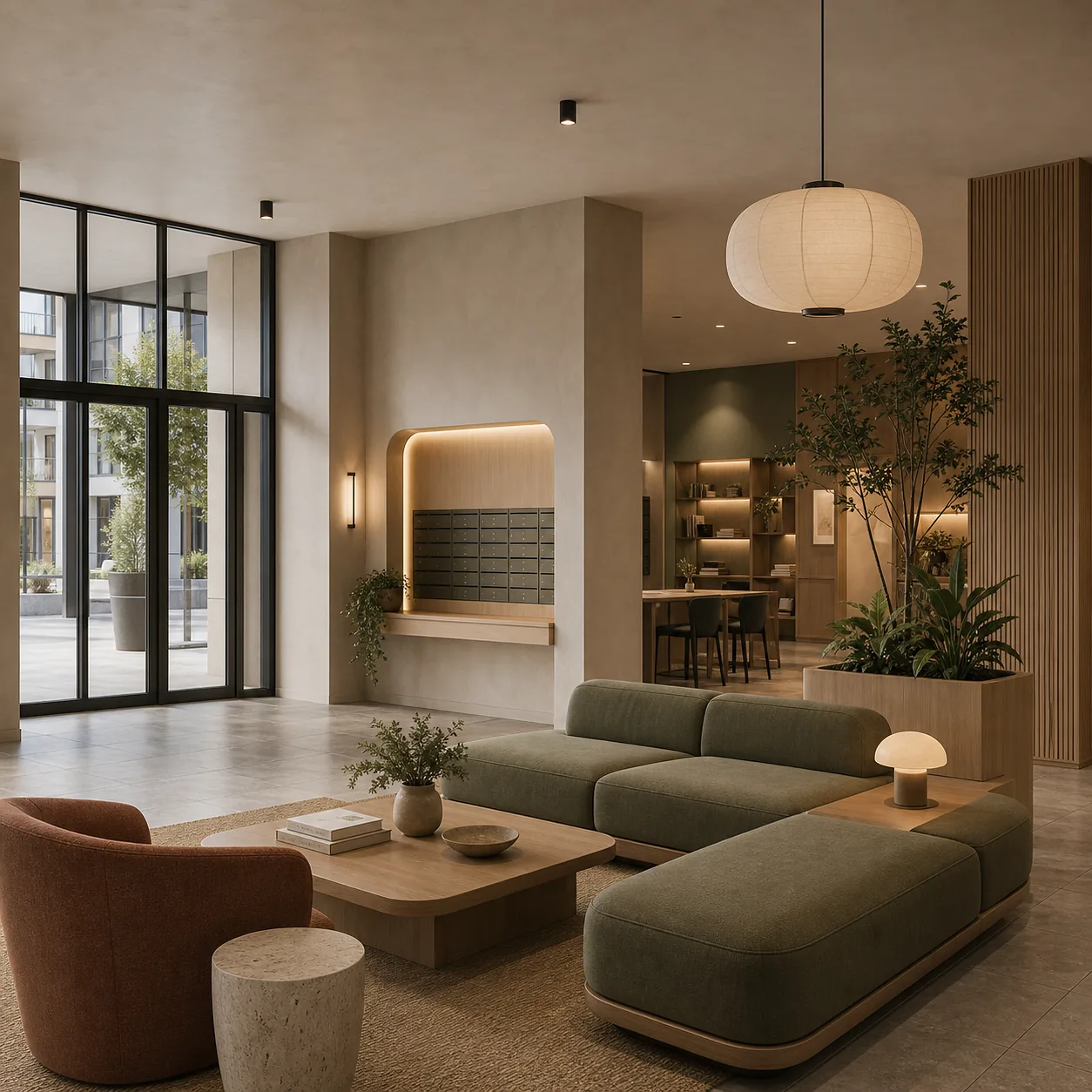
I BTR är gemensamma ytor ett säljargument. En väldesignad coworkinghörna, gym eller takterrass motiverar hyran och minskar vakans. Dåligt genomförda är de en kostnad utan avkastning.
Material som inte håller för omsättningen
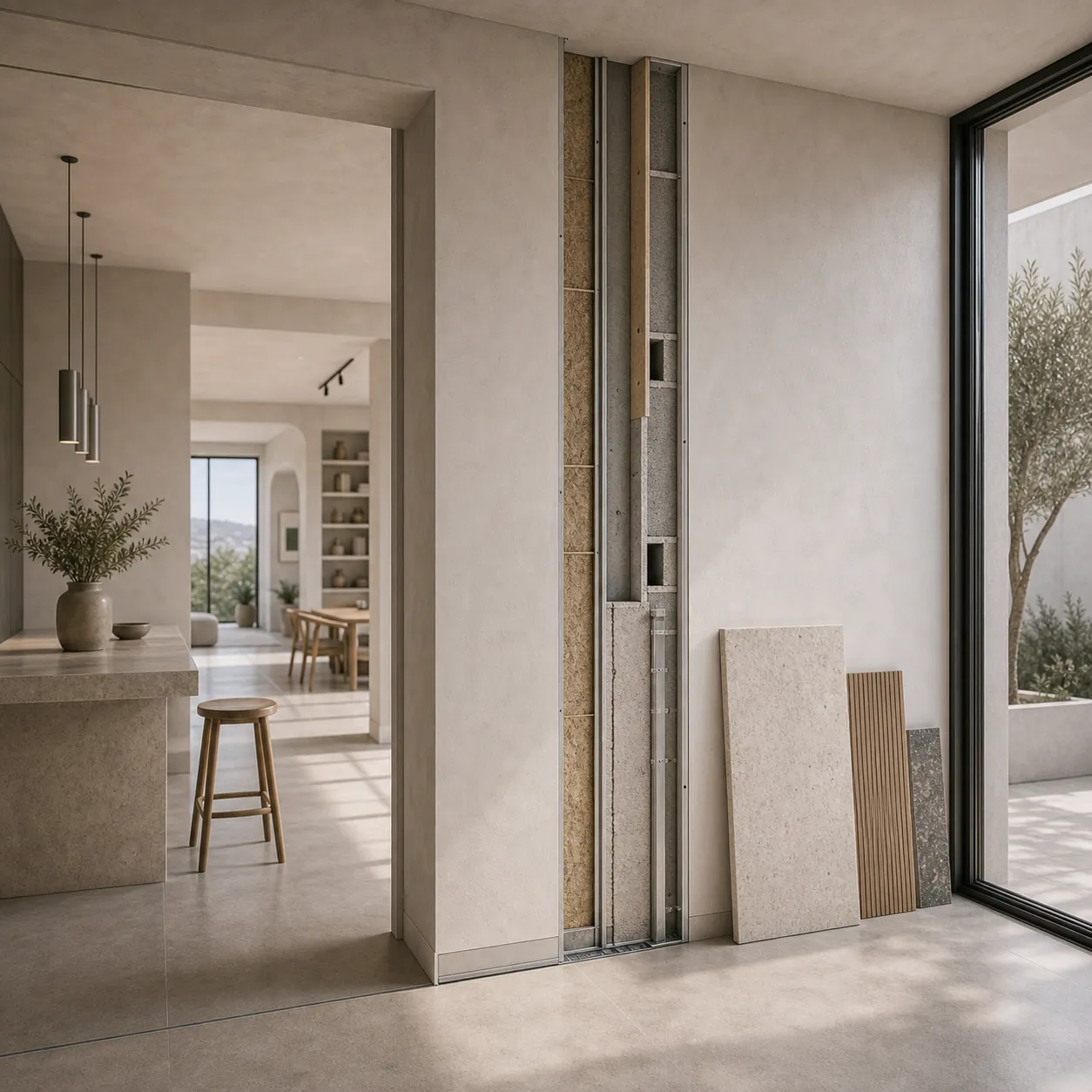
En BTR-fastighet ska klara hyresgästomsättning i 15-20 år. Design som inte tar hänsyn till hållbarhet och underhållskostnad ger löpande kostnader som urholkar avkastningen.
Processen
Så arbetar vi
1.Mötet
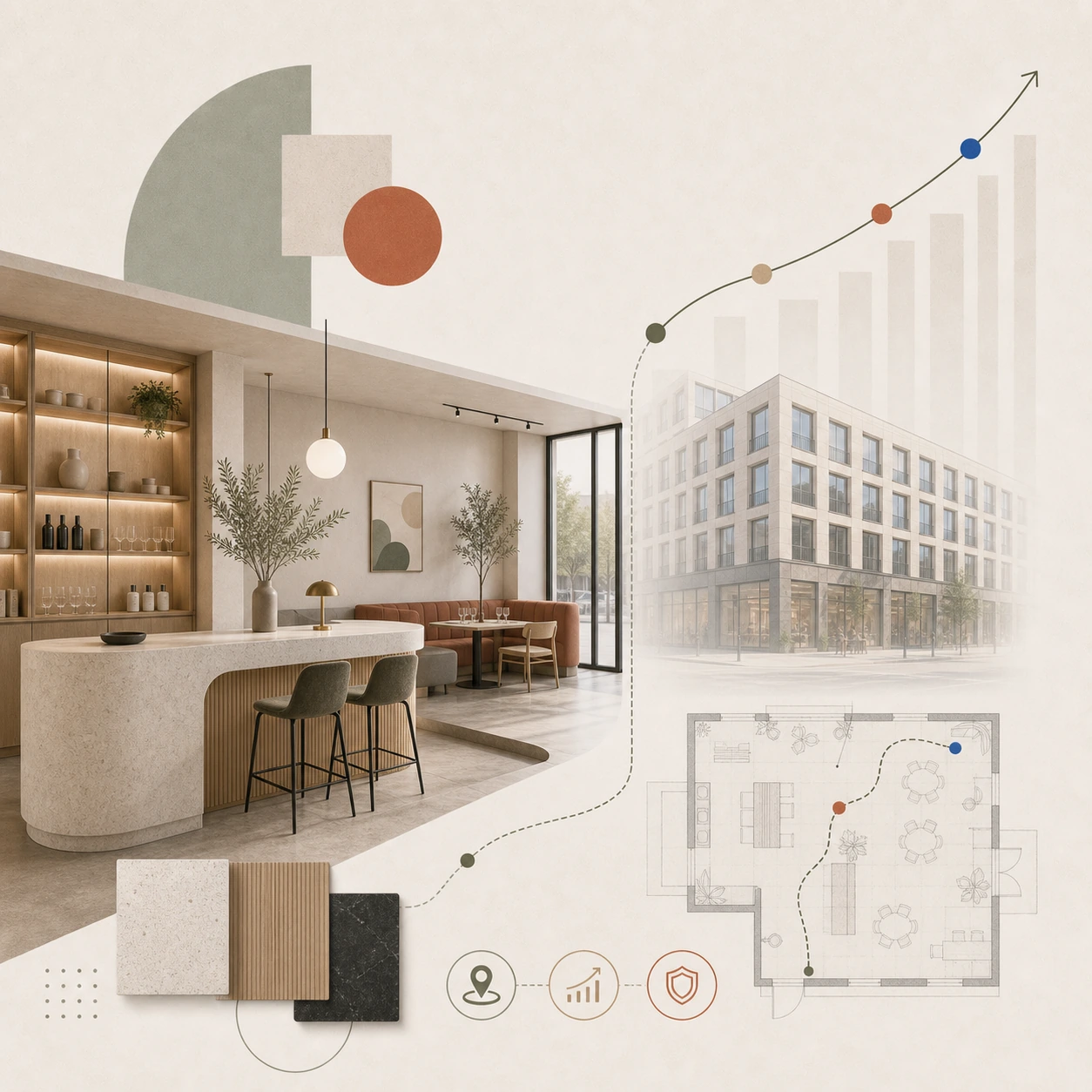
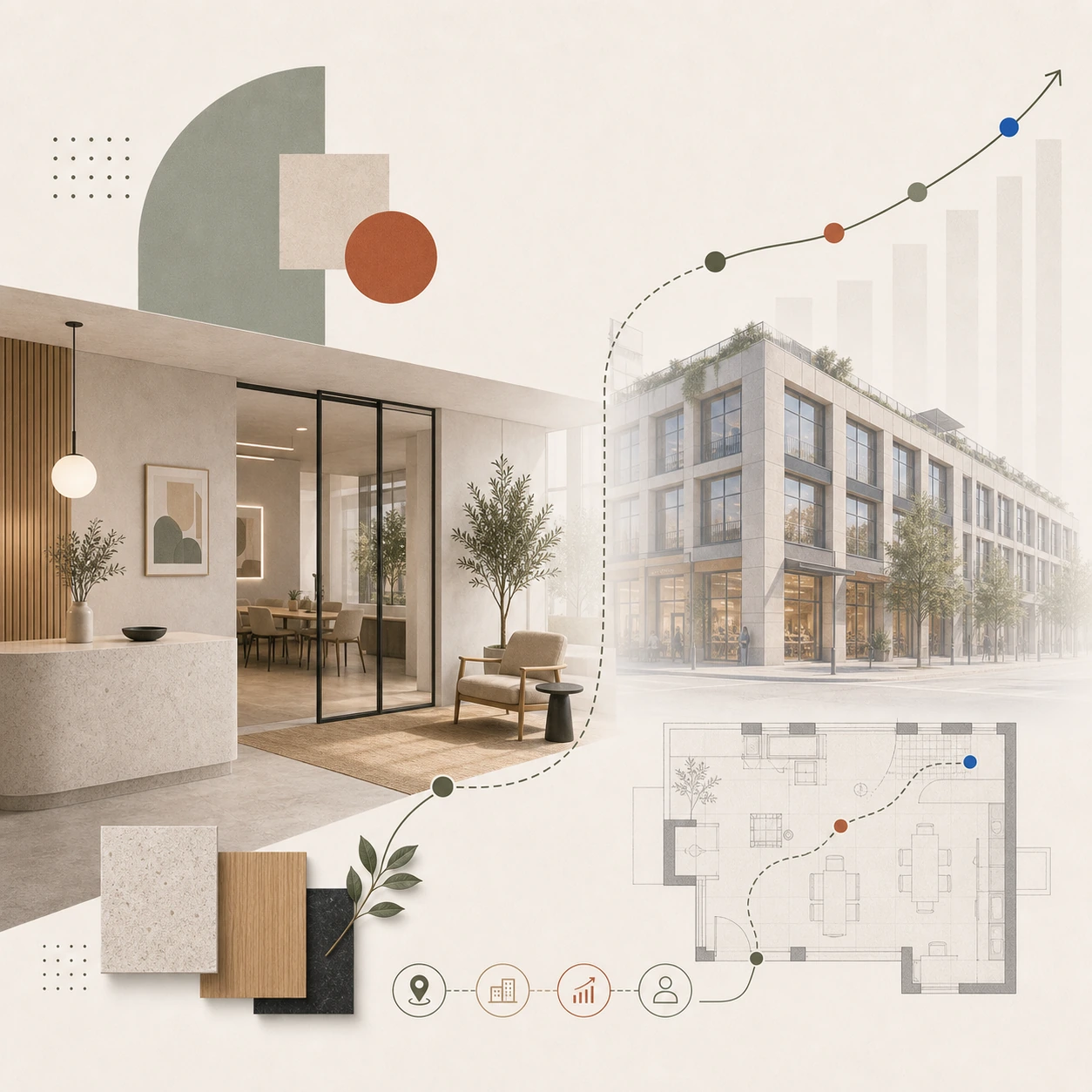
Vi analyserar hyresgästprofilen, målhyran, konkurrensen i området och fastighetens tekniska förutsättningar. Designen kalibreras för att motivera målhyran.
2.Designen
För portföljer med flera fastigheter utvecklar vi ett skalbart designsystem som kan replikeras med konsekvens mellan byggnader. Fastighetens identitet, inte enhetsinredning. 3D-visualisering innan beslut.
3.Produktionen
Bygghandlingar, materialval med hållbarhets- och underhållsperspektiv, FF&E-lista med prisalternativ. Låst budget innan bygget startar.
4.Installationen
Byggledning och slutbesiktning. Fastigheten levereras klar för fotografering och redo att ta emot den första hyresgästen.
52%
av de färdigställda lägenheterna i flerbostadshus i Storstockholm 2024 var hyresrätter, enligt SCB
Positionering
Det som skiljer fastigheten från de likvärdiga alternativ hyresgästen tittar på samma dag är utformningen, inte kvadratmetrarna.
3 mån
förlorad hyresintäkt per vakant enhet vid hyresgästbyte, en kostnad som väldesignade fastigheter reducerar konsekvent
20 år
genomsnittlig hålltid för BTR-investeringar i Norden, vilket kräver design och material som håller för den tidshorisonten
Vad BTR-ägare frågar oss
Vad förlorar en BTR-fastighet på att sakna designdifferentiering?
Den konkurrerar enbart på hyra, och hyran har alltid ett tak. Hyresgästen väljer på upplevd kvalitet, så utan differentiering går det inte att hålla en nivå över marknadsgenomsnittet.
Hur påverkar design hyresgästomsättningen?
Varje hyresgäst som inte förnyar innebär förlorad hyra i vakans plus kostnaden för att hitta nästa. Design som skapar ett boende folk faktiskt trivs i minskar hur ofta det händer.
Vad ska man tänka på med gemensamma ytor och material?
I BTR är gemensamma ytor ett säljargument: en väldesignad coworkinghörna, ett gym eller en takterrass motiverar hyran. Materialen ska samtidigt klara hyresgästomsättning över hela innehavstiden, annars äts avkastningen upp av underhåll.
BTR Real Estate and Rental Portfolios · Stockholm and Sweden
The BTR segment in Sweden is growing rapidly. Institutional real estate owners, funds and housing developers are building and acquiring rental portfolios with long-term returns in mind. In a market where tenants have choice, the design of the property is a direct variable for rental income, vacancy rate and property value. We design BTR properties and rental portfolios with that perspective: the design should perform on all three parameters, not just look good on rendering.
The real problem
A BTR property without differentiated design competes on rent alone. And rent always has a ceiling.
Tenants choose based on perceived quality. A well-designed property is what separates it from the equivalent flats a tenant views the same day, and that carries both the rent and how long they stay.
Renting below potential
Without design differentiation, the property cannot maintain a rent above the market average. The investment in design provides direct and measurable returns in the form of the rent the market will accept.
High tenant turnover
Each tenant that does not renew means 1-3 months of lost rent in vacancy plus the cost of finding the next tenant. Designs that create genuinely satisfied tenants consistently reduce that turnover.
Common areas without yield
In BTR, common areas are a selling point. A well-designed coworking corner, gym or roof terrace justifies the rent and reduces vacancy. Poorly implemented, they are a cost with no return.
Materials that do not hold up to turnover
A BTR property should withstand tenant turnover for 15-20 years. Design that does not take sustainability and maintenance costs into account results in ongoing costs that erode returns.
The process
How we work
1.The meeting
We analyze the tenant profile, the target rent, the competition in the area and the technical conditions of the property. The design is calibrated to justify the target rent.
2.Designing
For multi-property portfolios, we develop a scalable design system that can be replicated with consistency between buildings. Property identity, not unit interior design. 3D visualization before decision.
3.Production
Construction documents, choice of materials with sustainability and maintenance perspective, FF&E list with price options. Locked budget before construction starts.
4.Installation
Construction management and final inspection. The property is delivered ready for photography and ready to receive the first tenant.
52%
of the dwellings completed in multi-dwelling buildings in Greater Stockholm in 2024 were rental tenure, according to Statistics Sweden
Positioning
What separates the property from the equivalent options a tenant views the same day is how it is designed, not its floor area.
3 months
lost rental income per vacant unit when changing tenants, a cost that well-designed properties consistently reduce
20 years
average hold period for BTR investments in the Nordics, which requires design and materials that last for that time horizon
What BTR owners ask us
What does a BTR property lose without design differentiation?
It competes on rent alone, and rent always has a ceiling. Tenants choose on perceived quality, so without differentiation the property cannot hold a level above the market average.
How does design affect tenant turnover?
Every tenant who does not renew means lost rent in vacancy plus the cost of finding the next one. Design that creates a home people genuinely settle into reduces how often that happens.
What should we consider for common areas and materials?
In BTR the common areas are a selling argument: a well-designed coworking corner, a gym or a roof terrace justifies the rent. At the same time the materials have to survive tenant turnover across the whole hold period, or maintenance eats the return.