Ljus är det designelement som påverkar mest och kostar minst att göra rätt.
Det är sant i en restaurang, ett kontor, en butik, ett hotellrum och en klinik. Det är sant för lokaler med höga ambitioner och för lokaler med begränsad budget. Och det är det område som konsekvent underskattas och underprioriteras.
Vad ljus gör med en människa
Ljus påverkar oss fysiologiskt och psykologiskt. Ljusets intensitet påverkar vakenhet och energinivå. Starkt, kallt ljus håller oss alerta. Dämpad, varm belysning lugnar och relaxar. Det är ett relevant designbeslut i alla miljöer: vill du att folk ska vara alerta och fokuserade, eller vill du att de ska slappna av och stanna länge?
Ljusets färgtemperatur, mätt i Kelvin, är en teknisk parameter med stor praktisk effekt. Varmt ljus, 2700 till 3000 Kelvin, upplevs som mysigt och avkopplande. Neutralt ljus, 3500 till 4000 Kelvin, är standard i kontorsmiljöer. Kallt ljus, 5000 Kelvin och uppåt, är stimulerande men kan upplevas som hårt i längre exponering.
Belysningslager: varför en ljuskälla aldrig räcker
Det vanligaste misstaget i kommersiell belysning är att förlita sig på ett enda lager: takbelysning som lyser generellt. Det ger ett jämt men platt ljus utan djup, kontrast eller stämning.
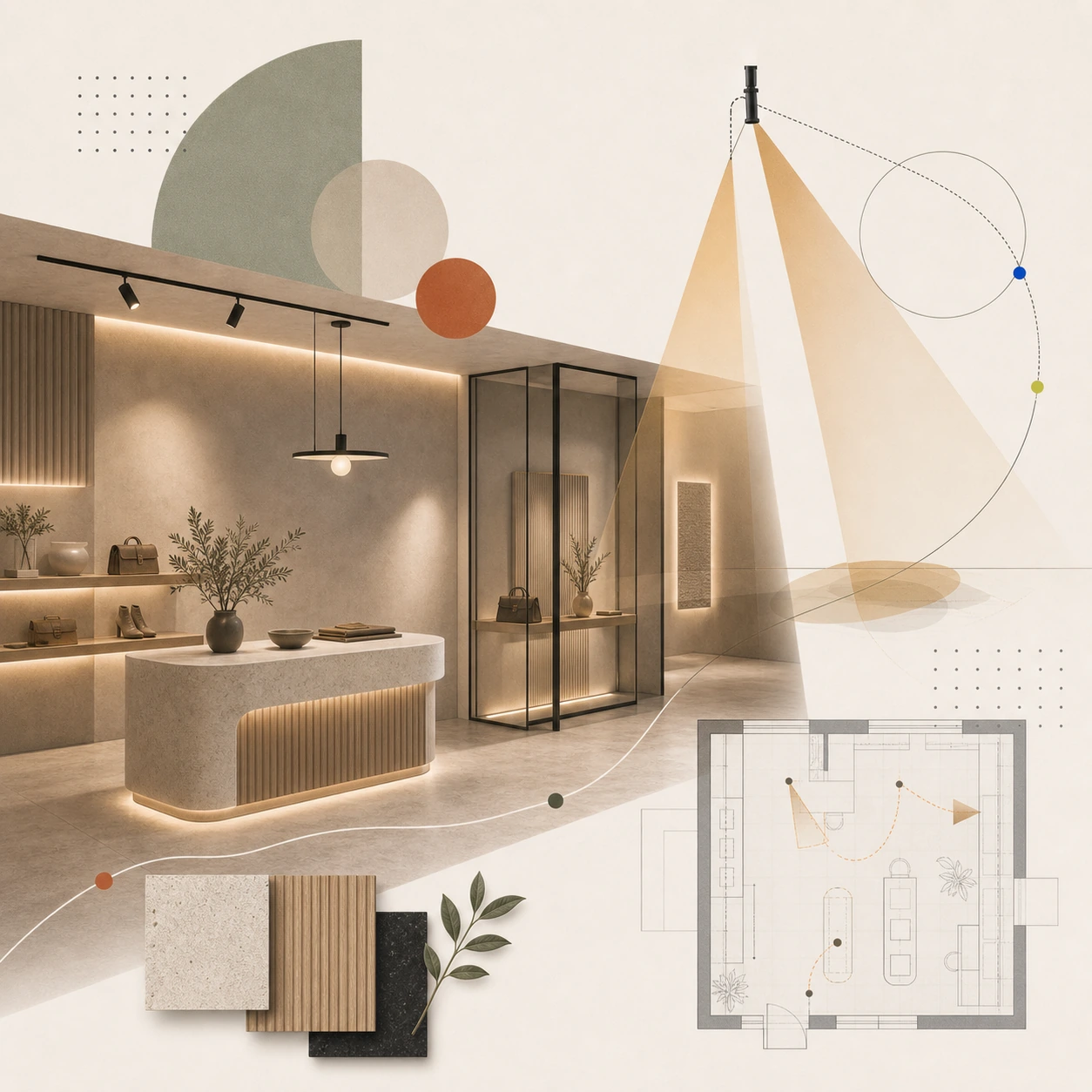
Professionell ljussättning arbetar med lager. Grundbelysning är det generella ljuset som gör att man kan orientera sig och fungera i rummet. Accent- och spotbelysning riktas mot specifika element: en produkt, ett konstverk, ett bordssegment i en restaurang. Stämningsbelysning arbetar med dimrar och indirekta ljuskällor för att skapa en känsla snarare än en funktion. Naturligt ljus är det starkaste men svårast att kontrollera.
Restauranger och matupplevelse
I en restaurang påverkar ljuset direkt hur maten ser ut. Färgtemperaturen på belysningen ovanför bordet avgör om köttets röda färg ser aptitlig ut eller grå ut, om grönsakerna ser levande eller dunkla ut.
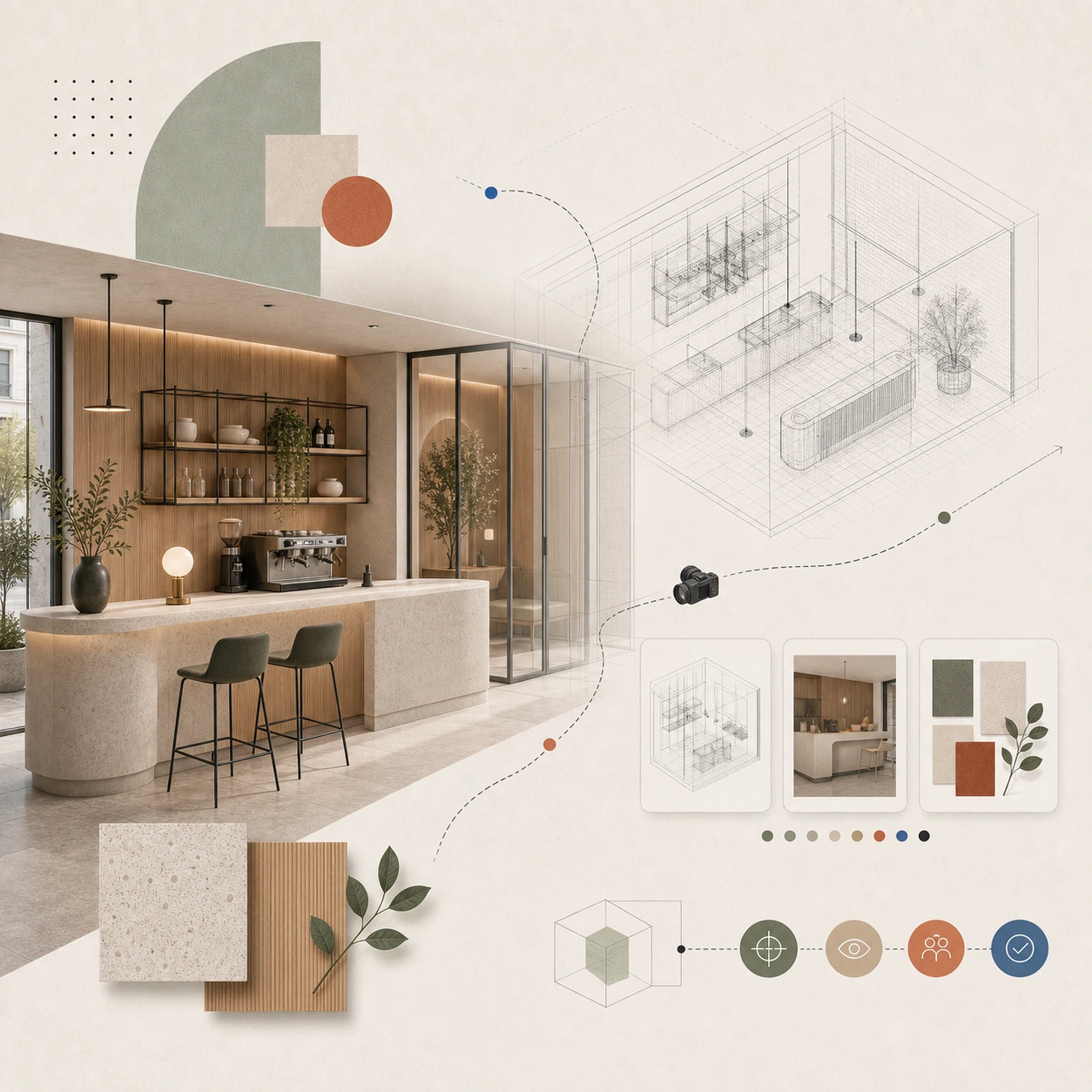
Varmt ljus i restaurangsegmentet är ingen slump. Det är ett aktivt val som förbättrar upplevelsen av maten och skapar den intimare stämning som får gäster att stanna längre. En restaurang med ett fast belysningssystem som inte kan anpassas förlitar sig på ett kompromiss som aldrig är optimalt.
Kontor och produktivitetsbelysning
I ett kontor är ljusets uppgift att stödja fokus under långa arbetspass utan att skapa utmattning. Bländning är fienden. Det uppstår när ljusskällor placeras i synfältet, när skärmar reflekterar fönsterljus, eller när tak- och väggytor är för blankt reflekterande.
Dimmerbar belysning i kontor gör det möjligt för anställda att anpassa sin ljusmiljö till arbetsuppgiften. Det är en liten investering med stor påverkan på välmående och produktivitet.
Butik och produktbelysning
I en butik är ljusets primära uppgift att lyfta fram produkten. Spotbelysning mot produkterna, med rätt färgtemperatur för produktens material, gör en dramatisk skillnad i hur produkten upplevs av en kund. Det är skillnaden mellan en produkt som lyser upp ur hyllan och en som försvinner.
Energieffektivitet och LED
All kommersiell belysning ska idag vara LED. Det är inte ett hållbarhetspåstående, det är ett ekonomiskt faktum. LED-belysning konsumerar 70 till 80 procent mindre energi än traditionella glödlampor och håller avsevärt längre. I en kommersiell lokal med belysning igång stora delar av dygnet är kostnadsbesparingen betydande.
Planerar ni ett komplext kommersiellt projekt? Berätta om projektet via kontaktalternativen nedan.
Lighting is the design element that has the most impact and costs the least to get right.
It's true in a restaurant, an office, a store, a hotel room, and a clinic. It's true for venues with high ambitions and for venues with limited budgets. And it's the area that's consistently underestimated and under-prioritized.
What light does to a person
Light affects us physiologically and psychologically. The intensity of light affects alertness and energy levels. Bright, cold light keeps us alert. Soft, warm lighting calms and relaxes. It’s a relevant design decision in any environment: do you want people to be alert and focused, or do you want them to relax and stay for a long time?
The color temperature of light, measured in Kelvin, is a technical parameter with great practical effect. Warm light, 2700 to 3000 Kelvin, is experienced as cozy and relaxing. Neutral light, 3500 to 4000 Kelvin, is standard in office environments. Cool light, 5000 Kelvin and above, is stimulating but can be experienced as harsh in longer exposures.
Lighting layers: why one light source is never enough
The most common mistake in commercial lighting is to rely on a single layer: overhead lighting that shines generally. It provides an even but flat light without depth, contrast or mood.
Professional lighting works in layers. General lighting is the general light that allows you to orient yourself and function in the room. Accent and spot lighting are directed at specific elements: a product, a piece of art, a table segment in a restaurant. Mood lighting works with dimmers and indirect light sources to create a feeling rather than a function. Natural light is the strongest but the most difficult to control.
Restaurants and dining experience
In a restaurant, lighting directly affects how food looks. The color temperature of the lighting above the table determines whether the red color of meat looks appetizing or gray, whether vegetables look vibrant or dull.
Warm lighting in the restaurant segment is no accident. It is an active choice that enhances the dining experience and creates the more intimate atmosphere that makes guests stay longer. A restaurant with a fixed lighting system that cannot be adjusted relies on a compromise that is never optimal.
Office and productivity lighting
In an office, the task of lighting is to support focus during long work shifts without causing fatigue. Glare is the enemy. It occurs when light sources are placed in the field of vision, when screens reflect window light, or when ceiling and wall surfaces are too glossy and reflective.
Dimmable office lighting allows employees to adapt their lighting environment to the task at hand. It's a small investment with a big impact on well-being and productivity.
Store and product lighting
In a store, the primary function of light is to highlight the product. Spot lighting on the products, with the right color temperature for the product's material, makes a dramatic difference in how the product is perceived by a customer. It's the difference between a product that lights up off the shelf and one that disappears.
Energy efficiency and LED
All commercial lighting should be LED today. This is not a sustainability claim, it is an economic fact. LED lighting consumes 70 to 80 percent less energy than traditional incandescent bulbs and lasts significantly longer. In a commercial space with lighting on for large parts of the day, the cost savings are significant.
Planning a complex commercial project? Tell us about it using the contact options below.